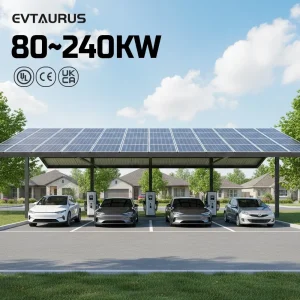
Industrial Off-Grid & Hybrid Infrastructure Blueprints for Next-Generation Commercial Electrification and Solar EV Integration across the Sahel Region.
High-efficiency DC coupled solar inverters and intelligent EVSE topologies engineered for remote Malian industrial deployments.

Mali's geographic positioning within the Sahel region endows it with some of the planet's highest horizontal solar irradiance profiles, regularly exceeding 6.0 kWh/m²/day. However, the commercial and industrial (C&I) sectors face an acute paradox: immense solar potential paired with extreme localized grid instability, characterized by high tariffs, recurrent load shedding, and vast geographic regions isolated from the central Énergie du Mali (EDM-SA) grid network. For heavy industries, logistics fleets, and telecommunications operations in remote economic centers like Kayes, Sikasso, and the outskirts of Bamako, relying entirely on fossil-fuel-powered diesel generators introduces extreme operational cost vulnerabilities and supply chain risks.
The integration of high-power DC charging topologies directly with utility-scale and localized Solar Photovoltaic (PV) installations represents a major technical leap forward for microgrid resilience. By eliminating the multi-stage conversion losses typical of traditional AC-coupled setups (PV DC to Inverter AC, then Charger AC back to Battery DC), direct DC-coupled integration bypasses unnecessary conversion stages. This optimization preserves between 12% and 18% of the total generated solar energy, which would otherwise be lost as heat—a critical benefit in ambient operating environments that frequently exceed 45°C.
"Implementing direct-coupled DC charging infrastructure across Mali's industrial sectors reduces dependency on imported heavy fuel oil (HFO), bypasses grid capacity limitations, and provides zero-emission operational stability for heavy commercial transport and static microgrids alike."
Worldwide, the electric vehicle supply infrastructure (EVSE) and utility solar manufacturing ecosystems are converging toward direct high-voltage DC architectures. Modern microgrids are transitioning away from localized AC distribution in favor of centralized DC micro-buses operating at potentials ranging from 750V DC to 1500V DC. This paradigm shift enables seamless load-balancing between solar arrays, stationary Lithium Iron Phosphate (LiFePO4) Battery Energy Storage Systems (BESS), and ultra-fast DC charging hubs.
In developed logistics networks, this architecture mitigates massive demand-charge penalties imposed by utility grids during concurrent fleet-charging cycles. For emerging markets, particularly within landlocked West African nations, this technological progression allows operators to establish self-sustaining energy hubs. These systems operate independently of weak municipal transmission lines, unlocking sustainable logistics corridors for mining operations, agricultural hubs, and municipal transit.
How specialized engineering adapts wide-bandgap semiconductors and multi-port balancing to Mali's demanding operating conditions.
The operational environment of Mali presents unique challenges for power electronics. High ambient air temperatures can induce thermal throttling in standard inverters, while fine Harmattan dust threatens conventional open-loop ventilation systems. Advanced DC charging equipment engineered for this market incorporates sealed liquid-cooled cooling loops or separate internal air channels with intelligent variable-frequency fans.
Enclosures are built to IP54 or IP65 ingress protection standards, sealing critical switching elements like Silicon Carbide (SiC) MOSFETs from external dust. This keeps internal operating temperatures low and extends the lifetime of the electronics, even during extended solar peak periods when ambient temperatures surpass 45°C.
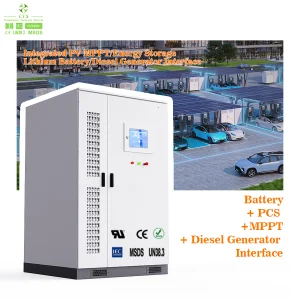
Rather than assigning fixed power limits to individual charging outputs, standard modern infrastructure uses intelligent, dynamic power pooling. In a typical depot installation, a centralized power cabinet receives high-voltage DC directly from the solar array and BESS bus. As vehicles connect, an internal control matrix assesses each vehicle's real-time State of Charge (SoC) and battery temperature, dynamically shifting power modules in 20kW or 30kW increments.
This dynamic allocation allows a fleet yard to charge a heavy haulage vehicle at 180kW while simultaneously routing lower-power top-offs to secondary fleet units or stationary industrial equipment, optimizing the utilization of available solar energy throughout the day.
For operations located outside the reliable EDM grid, our integration architectures include advanced grid-forming control algorithms. If the primary utility connection drops, the system can instantly isolate into a self-sustaining local microgrid ("islanding mode") without disrupting critical operations. Utilizing the rapid response of integrated LiFePO4 battery banks, the system stabilizes internal voltage and frequency, allowing heavy industrial machinery and DC fast chargers to continue running exclusively on solar generation.
A phased framework for West African industrial entities transitioning toward full solar-assisted heavy transport and energy independence.
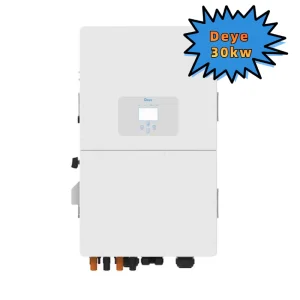
Retrofitting existing industrial sites with intelligent hybrid multi-port DC inverters and colocated BESS containers. Focus rests on displacing daytime diesel consumption by 60% through aggressive solar prioritization and optimizing existing telecom base station loads via Hall Effect current sensors.
Deploying dedicated 120kW to 360kW ultra-fast DC charging stations along major commercial transport routes linking Bamako to regional economic centers. Integrating high-voltage battery storage allows for ultra-fast charging capabilities without relying on high-capacity grid connections.
Linking isolated multi-site microgrids together into an interconnected Virtual Power Plant (VPP) network controlled by AI optimization software. Excess solar and battery capacity can be dynamically allocated to support the national grid or direct community electrification projects during periods of lower industrial demand.
Explore our complete range of certified power conversion systems, microgrid hybrid inverters, and heavy-duty industrial charging stations.
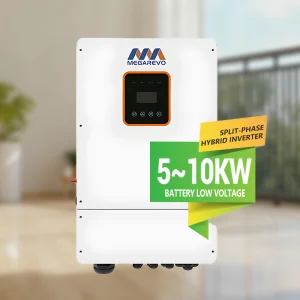
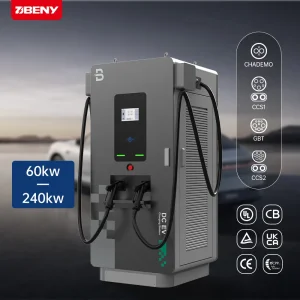
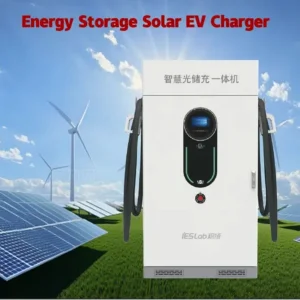
Shenzhen Vernon Charger Co., Ltd. is a pioneering manufacturer specializing in portable, wall-mounted, and ground-mounted DC EV chargers, providing comprehensive solutions for smart group charging, fleets, and public applications. The company focuses on delivering efficient, reliable, and intelligent charging systems designed to meet the diverse needs of residential, commercial, and industrial customers.
Vernon Charger’s product portfolio includes high-power DC fast chargers, portable charging units, wall-mounted and ground-mounted stations, and flexible group charging solutions. Each product incorporates advanced features such as intelligent power management, real-time monitoring, remote control, and energy optimization, ensuring safe, efficient, and user-friendly operation across multiple scenarios.
The company is committed to innovation and sustainability, integrating its DC charging systems with renewable energy sources and smart grid technologies. This enables optimized load balancing, reduced operational costs, and enhanced energy efficiency for fleet operators, public charging networks, and private users alike. With rigorous adherence to international safety and quality standards, Shenzhen Vernon Charger Co., Ltd. has established itself as a trusted partner in the EV charging industry. By providing cutting-edge DC EV charging solutions, the company empowers clients to adopt cleaner transportation, improve operational efficiency, and contribute to a sustainable energy future.
Comprehensive answers addressing common questions regarding the installation and performance of solar-integrated DC charging systems in high-temperature environments.
Direct DC coupling eliminates multiple power conversion stages. In a conventional AC-coupled setup, solar DC power must be inverted to AC, then converted back to DC inside the electric vehicle or storage battery. By implementing a centralized DC bus topology, energy flows directly from the solar array and battery banks to the vehicle, reducing conversion losses by 12% to 18% and minimizing heat generation in the charging electronics.
Our specialized West African hardware configurations feature IP54 or IP65 sealed enclosures that protect sensitive components from airborne dust. The system utilizes independent internal cooling ducts or liquid-cooling loops to separate high-power components from external air intake, preventing dust build-up and ensuring stable continuous performance even in ambient temperatures up to 50°C.
Yes, our systems include grid-forming control software that enables reliable standalone off-grid operation. By integrating stationary LiFePO4 battery storage, the system maintains steady voltage and frequency reference levels, allowing continuous fast charging from solar power independently of the main utility grid.
The systems natively support Open Charge Point Protocol (OCPP) 1.6J and 2.0.1, enabling secure integration with local and cloud-based fleet management platforms via cellular networks, satellite links, or local industrial network connections.
The dynamic load controller monitors real-time demand across connected vehicle chargers and other facility equipment. If total power consumption nears the safe operating limit of the local solar inverter or battery bank, the system automatically adjusts charging rates in small increments to prevent overload and ensure stable facility operation without unexpected shutdowns.
 Vernon Charger