Semantic Deep Dive · EV Charging Infrastructure

Multi-Port DC EV Chargers Suppliers & Exporters Serving the Mulifanua Market

Bridging Chinese factory-grade manufacturing, localized compliance support, and the emerging clean-energy corridor of Mulifanua, Samoa — a technical sourcing guide for fleet operators, utilities, and EPC contractors.

⚡Featured Multi-Port DC Chargers for Mulifanua Projects

A curated shortlist of high-power, multi-port DC charging hardware engineered for tropical coastal deployment, grid-constrained sites, and mixed-fleet operation.
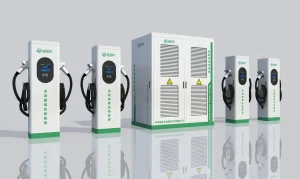
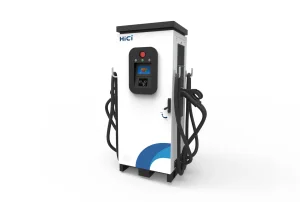
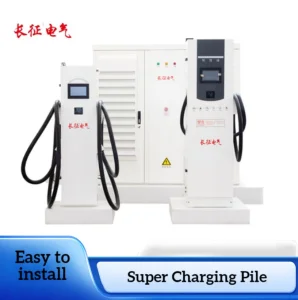
Yaolaichong 400kw 480kw multi-port DC fast charger for Mulifanua market

Yaolaichong Safe Power 400kw 480kw Multi-Port Feature Charging Stack EV DC Fast Charger

View Product
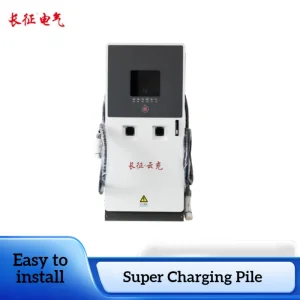
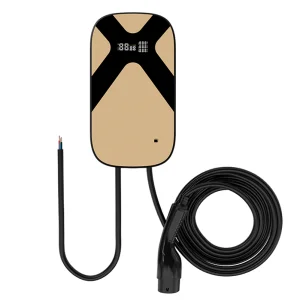
Versatile multi-port DC EV charger supplied to Mulifanua, Samoa

Versatile Multi-Port DC EV Charger for Electric Vehicles

View Product
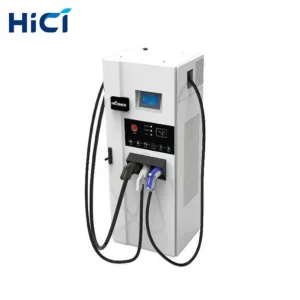
Versatile multi-port DC EV charger export configuration Mulifanua

Versatile Multi-Port DC EV Charger for Electric Vehicles

View Product
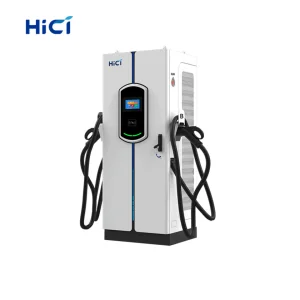
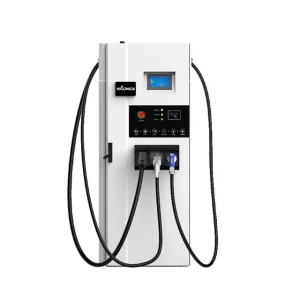
Multi-port smart high-power DC commercial EV charging station Mulifanua

Multi-Port Smart High-Power DC Commercial Electric Vehicle Charging Station EV Charger

View Product

🏭Shenzhen Vernon Charger Co., Ltd. — Factory Authority Behind the Supply Chain

Shenzhen Vernon Charger Co., Ltd. is a pioneering manufacturer specializing in portable, wall-mounted, and ground-mounted DC EV chargers, providing comprehensive solutions for smart group charging, fleets, and public applications. The company focuses on delivering efficient, reliable, and intelligent charging systems designed to meet the diverse needs of residential, commercial, and industrial customers.
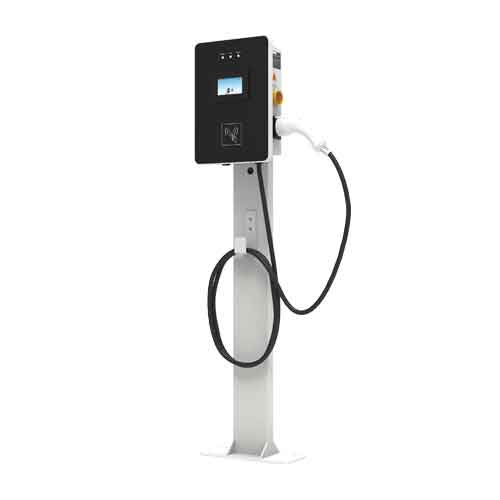
Shenzhen Vernon Charger Co., Ltd. manufacturing facility

Vernon Charger’s product portfolio includes high-power DC fast chargers, portable charging units, wall-mounted and ground-mounted stations, and flexible group charging solutions. Each product incorporates advanced features such as intelligent power management, real-time monitoring, remote control, and energy optimization, ensuring safe, efficient, and user-friendly operation across multiple scenarios.

The company is committed to innovation and sustainability, integrating its DC charging systems with renewable energy sources and smart grid technologies. This enables optimized load balancing, reduced operational costs, and enhanced energy efficiency for fleet operators, public charging networks, and private users alike.
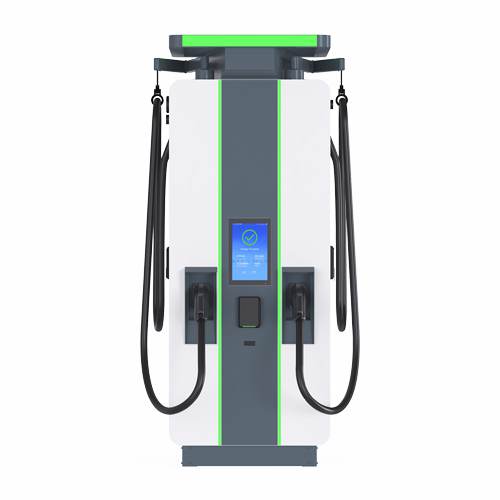
Vernon Charger DC EV charging systems production line

With rigorous adherence to international safety and quality standards, Shenzhen Vernon Charger Co., Ltd. has established itself as a trusted partner in the EV charging industry. By providing cutting-edge DC EV charging solutions, the company empowers clients to adopt cleaner transportation, improve operational efficiency, and contribute to a sustainable energy future.

0KW Peak Output Per Stack
0Multi-Port SKUs Available
0Hz Grid Compatibility Floor
0Hour Global Dispatch Support

🌎The Mulifanua Market Context: Why This Corridor Matters

Mulifanua sits on the western tip of Upolu, Samoa, anchoring the ferry terminal that connects Upolu to Savai’i. That geographic role makes it a natural economic junction — and a logical early adopter for DC fast charging.

🚌Commercial & Industrial Character

Mulifanua’s economy is transport-anchored: ferry logistics, freight staging, fuel retail, and inter-island passenger movement dominate. Diesel dependency is high, which makes the total-cost-of-ownership case for electrified fleets unusually strong once DC charging is available on-site.

  • Ferry-terminal-adjacent commercial traffic with predictable dwell times
  • Fleet staging yards and freight transfer lots
  • Tourism transfer operators serving the Savai’i crossing
  • Municipal and utility service vehicles based on the western coast

⚡Grid & Infrastructure Reality

Island grids across the Pacific operate with constrained headroom. That is precisely where multi-port DC charging stacks with intelligent load balancing outperform single-gun alternatives: one grid connection, many vehicles, dynamically shared power.

  • Single-point grid connection with multi-vehicle dispatch
  • Demand-limiting firmware to avoid transformer overload
  • Solar-ready DC bus integration for daytime offset
  • Cyclone-season resilience planning for coastal sites
Information-gain note: Most supplier pages describe hardware. Very few describe the site. For a market like Mulifanua, the winning sourcing brief must address salt-air corrosion class, humidity-driven thermal derating, ferry-schedule-driven charging peaks, and single-transformer capacity limits — all of which directly change the charger specification you should order.

🛡Localized Support & Compliance Assurance for Pacific Deployments

Exporting to Mulifanua is not a catalogue transaction. It is a compliance, logistics, and after-sales engineering exercise. Here is how a competent Chinese factory-side partner structures it.

📄Certification & Standards

  • IEC 61851 & IEC 62196 connector compliance
  • CE / RoHS documentation packs for customs
  • OCPP 1.6J / 2.0.1 for network interoperability
  • IP54–IP65 enclosure ratings for coastal humidity
  • Anti-corrosion C4/C5 coating options for salt air

📦Export & Logistics Engineering

  • FCL/LCL packing with seaworthy crating
  • Split-type architecture to reduce container volume
  • Spare-parts kit bundled per installed gun count
  • Documentation in English for local customs clearance
  • Remote commissioning over 4G/WiFi before vessel arrival

🔧After-Sales Enablement

  • Remote diagnostics and OTA firmware updates
  • Local technician training via video protocol
  • Modular power units for field swap, not full replacement
  • Mean-time-to-repair targets documented in SLA
  • Spare module stock held for Pacific lead times

🚚China Factory Supply Chain Advantages for Island Markets

Shenzhen’s charging hardware cluster offers an advantage that European and North American assembly plants structurally cannot match for Pacific island buyers: vertical integration, rapid customization, and short-run flexibility without a price penalty.

⚙Vertical Integration

Power modules, controllers, cabinets, and connectors sourced within a compact supplier radius — shorter lead times, tighter quality control, and fewer finger-pointing failures.

✍Customization at Low MOQ

Voltage windows, gun counts, cable lengths, and enclosure coatings can be tailored to a specific Mulifanua site without requiring container-scale commitments.

💰Cost Structure

Factory-direct pricing removes distributor margin layers, which is decisive when a single public charging hub must justify its business case in a small-volume island market.

📊Iteration Speed

Firmware and hardware revisions can be validated and shipped in weeks, not quarters — critical when standards like OCPP 2.0.1 and connector preferences keep evolving.

🌍Global Procurement Patterns Shaping Multi-Port Demand

Understanding how buyers elsewhere structure their multi-port DC charging purchases gives Mulifanua stakeholders a benchmark for what to demand from suppliers.

📈What Global Buyers Are Prioritizing

  • Power-per-connection efficiency: buyers compare kW delivered per square meter of site footprint, favoring stacked multi-port architectures
  • Network openness: OCPP compliance is now a non-negotiable tender requirement in most public procurement
  • Uptime SLAs: 98%+ availability targets are becoming standard, pushing buyers toward modular field-swappable designs
  • Total cost of ownership: energy efficiency, cooling strategy, and maintenance access increasingly outweigh sticker price
  • Renewable integration: solar- and storage-coupled DC bus designs are requested in tenders across island and remote-grid markets

💡What This Means for Mulifanua Buyers

  • Specify OCPP from day one — retrofitting is far more expensive than requiring it upfront
  • Insist on modular power units so a single module failure does not take the hub offline
  • Request documented derating curves at 35°C+ ambient and 90%+ humidity
  • Ask for salt-spray test reports, not just IP ratings — they are not the same thing
  • Negotiate spare-parts bundling at order time, given Pacific freight lead times

🔮Industry Trends: Where Multi-Port DC Charging Is Heading

🔌Megawatt Charging Stacks

Single cabinets are scaling from 400kW toward 480kW+ and beyond, with multi-gun dispensation becoming the default architecture for commercial depots. The charging stack concept — one power cabinet, many satellite dispensers — is now mainstream in high-traffic nodes.

🤖Software-Defined Charging

Modern multi-port chargers are increasingly defined by firmware: dynamic load balancing, time-of-use optimization, V2G readiness, and remote fleet scheduling. The hardware is becoming a delivery vehicle for software value.

☀Solar-First Site Design

In island and remote-grid markets, DC chargers are increasingly integrated with PV and battery storage at the DC bus level. This reduces grid strain during peak ferry-arrival periods and lowers effective energy cost per kWh delivered.

🔒Cybersecurity & OCPP 2.0.1

Public network operators now demand certificate-based authentication, signed firmware, and secure boot. Suppliers without a credible cybersecurity roadmap are increasingly excluded from tenders.

♻Modularity & Serviceability

Field-swappable power modules, tool-less connector replacement, and remote diagnostics are shifting from premium features to baseline expectations, particularly for sites with long service-logistics chains.

🌐Regional Standards Harmonization

Connector standards (CCS2, NACS, CHAdeMO sunset) continue to consolidate. Buyers in emerging markets benefit from specifying multi-standard dispensers or connector-swappable designs to protect residual asset value.

🗺Localized Application Scenarios in Mulifanua

Multi-port DC chargers are not a single product category — they are a site-specific solution. These are the deployment patterns that make commercial sense around the Mulifanua ferry corridor.

🚗Ferry-Terminal Fleet Hub

A 4–8 gun DC stack serving inter-island freight and passenger transfer vehicles during predictable dwell windows. Multi-port dispatch lets a single grid connection serve several vehicles in sequence without demand spikes.

🏠Commercial Depot Charging

Overnight and opportunity charging for logistics and tourism fleets based on the western coast. Split-type cabinets keep dispensers compact at the parking bay while power electronics sit in a protected enclosure.

🏢Public Highway Corridor Node

A roadside public charging hub combining 60–160kW portable-format units for rapid deployment with a higher-power stack for expansion. Phased capital deployment reduces upfront risk in low-volume early markets.

🏝Resort & Tourism Destination Charging

Hospitality sites near the ferry crossing can pair a modest DC multi-port unit with AC destination charging, capturing rental-EV and visitor demand while keeping transformer load within existing capacity.

❓Frequently Asked Questions — Sourcing Multi-Port DC Chargers for Mulifanua

Are multi-port DC chargers suitable for a small island grid like Samoa’s?
Yes — in fact they are often more suitable than multiple independent single-gun chargers. A multi-port stack draws from one grid connection and distributes power dynamically across guns, which means the site’s peak demand can be capped in firmware rather than by expensive transformer upgrades. For constrained island grids, this load-balancing capability is the single most valuable feature to specify.
What power rating should a Mulifanua site start with?
For a first-phase ferry-corridor deployment, 60–160kW multi-port portable-format units are a pragmatic entry point: fast to install, lower grid impact, and expandable. For a committed commercial depot or public hub, a 400–480kW split-type stack with 4–8 guns provides the headroom to grow without re-procuring cabinets. The decision should follow a load study of the available transformer capacity, not the charger catalogue.
How do you protect DC chargers from salt air and cyclone-season conditions?
Specify C4 or C5 anti-corrosion coating on enclosures and internal busbars, IP54 minimum (IP65 where washdown or direct spray is possible), and confirm salt-spray test documentation rather than relying on IP ratings alone. For cyclone exposure, ground-mounted split-type cabinets with anchored foundations and protected cable routing outperform wall-mounted installations. Thermal derating curves at 35°C+ ambient and high humidity should be requested in writing.
What certifications and protocols should the supplier provide?
At minimum: IEC 61851 and IEC 62196 compliance, CE and RoHS documentation for customs, an OCPP 1.6J or 2.0.1 implementation for network interoperability, and a written cybersecurity posture covering signed firmware and secure boot. Request the actual test reports, not just a compliance statement on a brochure.
How is after-sales support handled given the distance from China?
A competent factory partner provides remote diagnostics and OTA firmware updates over 4G/WiFi, modular power units designed for field swap rather than full cabinet replacement, video-guided technician training for local installers, and a spare-parts kit bundled at order time sized to the installed gun count. Given Pacific freight lead times, spare-parts bundling at purchase is not optional — it is the difference between 98% and 80% uptime.
Can multi-port chargers integrate with solar or battery storage?
Yes. Many modern multi-port DC stacks support DC bus integration with PV and battery systems, enabling daytime solar offset and peak-shaving during ferry-arrival demand spikes. This is especially relevant for island markets where grid energy is expensive and diesel backup is common. Ask the supplier for documented solar-integration architecture, not a verbal assurance.
What is the typical lead time from order to delivery for Mulifanua?
Standard configurations typically ship in 25–45 days from a Shenzhen factory, with custom voltage windows, gun counts, or enclosure coatings adding 1–2 weeks. Ocean freight to Samoa adds transit time that varies by routing; split-type architectures that reduce container volume can materially lower freight cost. Confirm both production lead time and freight routing in the purchase agreement.
Why source from a Chinese factory rather than a regional distributor?
Factory-direct sourcing removes distributor margin, enables low-MOQ customization, and gives direct access to the engineering team for firmware and configuration questions. For island markets with small initial volumes but long-term expansion plans, that direct relationship is often more valuable than local inventory, because it allows phased procurement matched to actual utilization rather than distributor stock cycles.
✉ Send Inquiry Now

🔧Full Multi-Port DC Charger Range — Export-Ready for Mulifanua

Portable, wall-mounted, ground-mounted, and split-type configurations from 20kW to 480kW — all available factory-direct with export documentation and remote commissioning support.
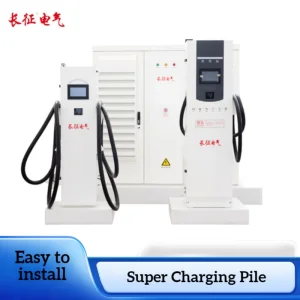
Portable DC fast charging 60-160kw multi-port EV charger for Mulifanua

Portable DC Fast Charging 60-160kw Multi-Port EV Car Charger

View Product
Portable DC fast charging EV car charger export Mulifanua

Portable DC Fast Charging 60-160kw Multi-Port EV Car Charger

View Product
Industrial-grade multi-port DC fast charging EV station Mulifanua

Industrial-Grade Multi-Port DC Fast Charging Electric Vehicle Charging Station EV Charger

View Product
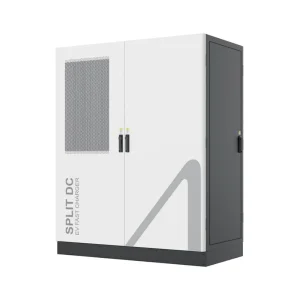
Industrial-grade multi-port DC fast charging station for Samoa

Industrial-Grade Multi-Port DC Fast Charging Electric Vehicle Charging Station EV Charger

View Product
Multi-port DC EV charging station 60-160kw Mulifanua

Multi-Port DC EV Charging Station 60-160kw EV Car Charger

View Product
480kw main cabinet split type fast DC charger with multi-guns Mulifanua

480kw Main Cabinet Split Type Fast DC Electric Car Charger New Energy Electric Vehicle Charging Pile EV Car Charging Station with Multi-Guns

View Product
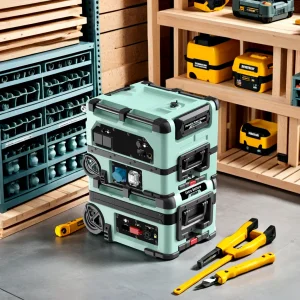
Multi-input portable power station with AC parallel capability Mulifanua

Multi-Input Portable Power Station with AC Parallel Capability, Charging Discharging Adjusts

View Product
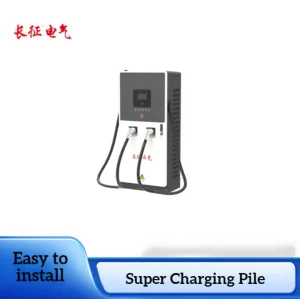
Car charger for home use EV fast charging multi-port Mulifanua

Which Car Charger to Buy for in-Car Home Use, EV Fast Charging or Multi-Port?

View Product

⚡High-Power & Smart Multi-Port Configurations

45-65Hz multi-port fast charging 20kw-400kw high power smart EV charging station Mulifanua

45-65Hz Multi-Port Fast Charging 20kw-400kw High Power Smart EV Charging Station

View Product
45-65Hz multi-port fast charging EV station 20kw-400kw Mulifanua

45-65Hz Multi-Port Fast Charging 20kw-400kw High Power Smart EV Charging Station

View Product
Multi-port DC charging station for efficient power delivery Mulifanua

Multi-Port DC Charging Station for Fast and Efficient Power Delivery

View Product
Multi-port smart high power easy installation EV charging station 45-65Hz Mulifanua

Multi Port Smart High Power Easy Installation Stable 45-65Hz Proper 70kpa-106kpa EV Charging Station

View Product