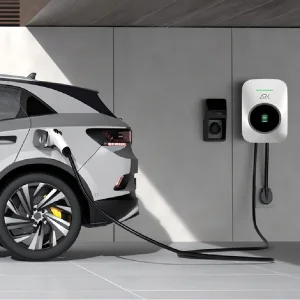
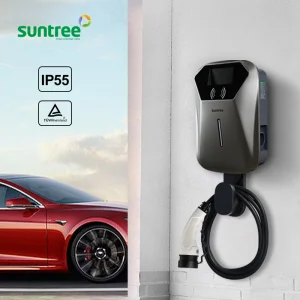
Premium smart charging systems engineered for remote configuration, dynamic load optimization, and rugged performance.
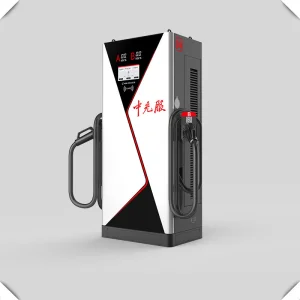
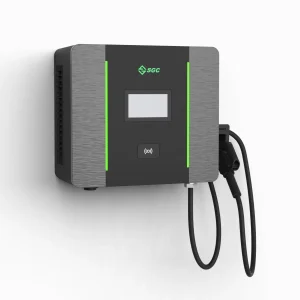
As the metropolitan landscape of Damascus, Syria steps forward into modern infrastructure revitalization, the transition to sustainable e-mobility presents unique opportunities. Traditional energy distribution systems across regional hubs like Damascus, Adra, and surrounding governorates require resilient, flexible, and decentralized designs. Our advanced DC Chargers with App Monitoring offer the exact telemetry and dynamic power-sharing features needed to offset local electrical fluctuations, transforming charging ports from passive energy sinks into active components of a modernized smart grid.
Unlike standard installations in regions with saturated power networks, operating EV charging points in the Levant requires deep technical integration with local microgrids. In Damascus, the electrical grid frequently utilizes dynamic load-shedding schedules and hybrid configurations. Integrating intelligent software-controlled DC fast chargers allows logistics operators, private enterprises, and regional fleets to capitalize on off-peak hours, coordinate solar-plus-storage frameworks, and deploy real-time monitoring to prevent system overloads.
Power Factor Efficiency
Dust & Splash Protection
1.6J & 2.0.1 Integrated
Max Operating Temp
On a global scale, the EV charging ecosystem is shifting rapidly from standard alternating current (AC) trickle chargers to ultra-fast direct current (DC) systems. The market demand is driven by fleet operators, municipal transport networks, and commercial destinations that require minimal charging times and maximum turnover rates. However, raw power is only half of the equation; intelligence via app-based cloud monitoring has become the global standard.
Modern DC fast charging systems leverage the Open Charge Point Protocol (OCPP) to communicate with central back-offices. This communication allows developers and operators to collect diagnostics, run remote hardware resets, configure dynamic load profiles, and process mobile payments seamlessly. By utilizing Silicon Carbide (SiC) semiconductor technologies, modern charging modules achieve efficiencies exceeding 95%, drastically reducing heat generation and energy waste—critical parameters for hot and arid environments.
Supports OCPP 1.6J and 2.0.1 protocols for real-time mobile app payments, user authorization, and structural analytics.
Active power limiting and dynamic scheduling features designed to buffer peak demand periods in unstable local grids.
Constructed with dual-chamber heat-dissipation housings and robust internal insulation to operate continuously at high temperatures.
Deploying electric vehicle infrastructure in Damascus demands adaptive engineering. Here are the core scenarios where our app-monitored DC charging units deliver high business value:
Our commitment to engineering excellence is highlighted by our advanced power topologies and reliable communication fallback protocols. The smart app communication interface relies on a dual-connectivity matrix, featuring local Wi-Fi/Ethernet channels combined with an cellular module (4G/5G). This setup ensures that if local network connections drop, the charging station stores records locally and continues to communicate with users via cellular networks.
The core rectifier modules are engineered with high-temperature de-rating protection, meaning the charger continues operating even during the peak hot seasons in Damascus. Instead of shutting down completely, the system scales down power output safely, protecting vital internal capacitors and electronic components.
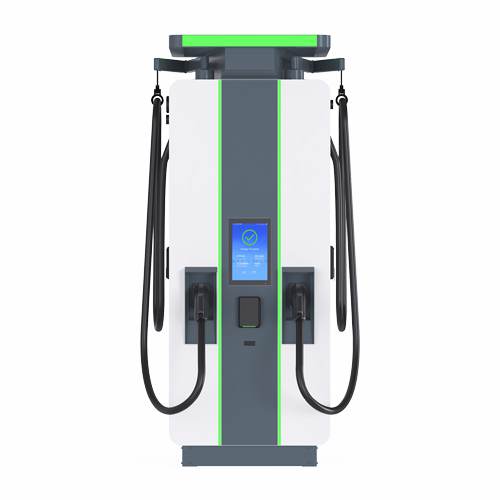
Shenzhen Vernon Charger Co., Ltd. is a pioneering manufacturer specializing in portable, wall-mounted, and ground-mounted DC EV chargers, providing comprehensive solutions for smart group charging, fleets, and public applications. The company focuses on delivering efficient, reliable, and intelligent charging systems designed to meet the diverse needs of residential, commercial, and industrial customers.
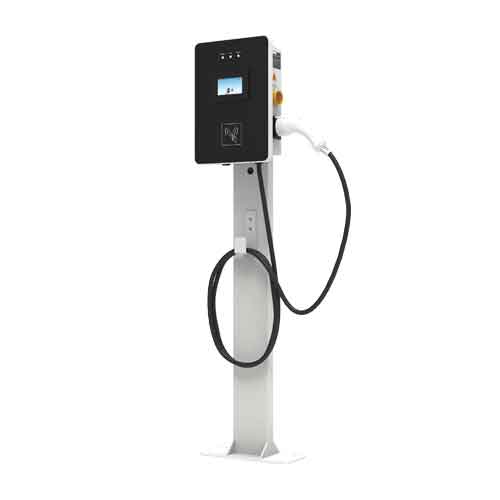
Vernon Charger’s product portfolio includes high-power DC fast chargers, portable charging units, wall-mounted and ground-mounted stations, and flexible group charging solutions. Each product incorporates advanced features such as intelligent power management, real-time monitoring, remote control, and energy optimization, ensuring safe, efficient, and user-friendly operation across multiple scenarios.
The company is committed to innovation and sustainability, integrating its DC charging systems with renewable energy sources and smart grid technologies. This enables optimized load balancing, reduced operational costs, and enhanced energy efficiency for fleet operators, public charging networks, and private users alike.
With rigorous adherence to international safety and quality standards, Shenzhen Vernon Charger Co., Ltd. has established itself as a trusted partner in the EV charging industry. By providing cutting-edge DC EV charging solutions, the company empowers clients to adopt cleaner transportation, improve operational efficiency, and contribute to a sustainable energy future.
Connect with our expert application engineers to configure a custom DC charging solution fitted to your site’s electrical and climatic profile.
Send Inquiry NowOur complete product range of high-efficiency charging systems, backup solar inverters, and multi-connector chargers.
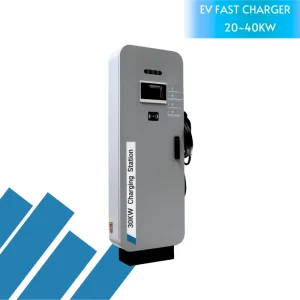
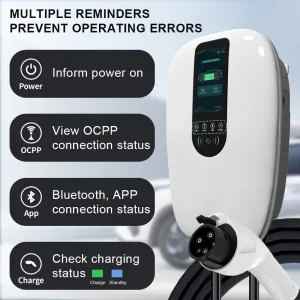
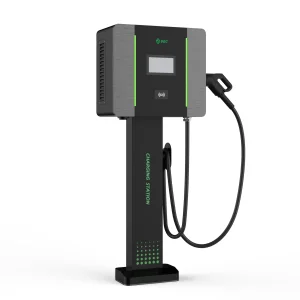
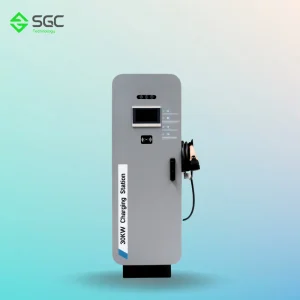
Find answers to technical specifications, local grid integrations, and structural product details.
Our smart charging stations are equipped with customizable power limiting configurations that can be controlled remotely via our proprietary App or centralized OCPP software. When regional power limits are constrained, operators can restrict power levels (e.g., dial down a 40kW unit to 15kW) or schedule charging to begin automatically once the grid stabilizes. Internal high-voltage surge protectors shield sensitive microchips from grid spikes.
Yes. The hardware is designed with heavy-duty heat sinks, ventilation baffles, and smart cooling fans. The system features a built-in safety program that gradually reduces output power if internal temperature thresholds are exceeded, preventing shutoffs and preserving the long-term reliability of the capacitor modules.
Our stations feature multi-channel communication structures. Operators can choose between hardwired RJ45 Ethernet connection, localized Wi-Fi access, or cellular backup (4G/5G module slot). If connection is temporarily lost, the charger records transaction data in its internal buffer and uploads the telemetry once connectivity is restored.
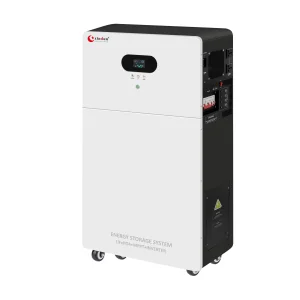
For installations looking to run off-grid or semi-off-grid setups, our 3kW hybrid solar inverters and battery chargers can manage local energy reserves. These units direct solar power to buffer batteries or feed power to Level 2 AC/DC EV charging stations, lowering dependency on the centralized electrical grid.
Yes. We offer charging configurations matching international standards, including CCS1, CCS2, NACS, and GBT charging connectors. Our chargers are fully compatible with electric vehicles from major European, Chinese, and North American brands.
All core charging systems are CE certified and undergo strict quality checks before shipping. The equipment includes protection features covering overcurrent, overvoltage, undervoltage, leakage current, and grounding faults to ensure safe operations for commercial and industrial users.
 Vernon Charger