A Comprehensive Industry Assessment of EVSE OEM Customization, Power Topology, Grid Optimization, and Modern Supply Chain Adaptation for High-Capacity Projects.
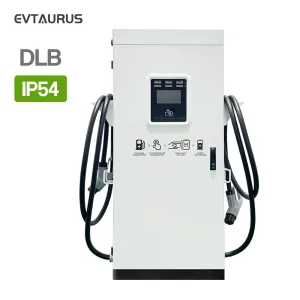
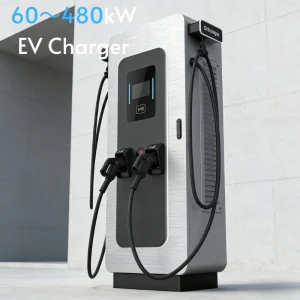
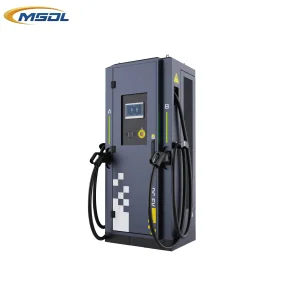
As a premier engineering manufacturer, Shenzhen Vernon Charger Co., Ltd. is a pioneering manufacturer specializing in portable, wall-mounted, and ground-mounted DC EV chargers, providing comprehensive solutions for smart group charging, fleets, and public applications. The company focuses on delivering efficient, reliable, and intelligent charging systems designed to meet the diverse needs of residential, commercial, and industrial customers.
By positioning itself at the confluence of power electronics engineering and SaaS IoT connectivity, Vernon Charger manages the end-to-end production of electrical infrastructure products. From industrial rectifiers to megawatt-level heavy fleet chargers, the system architectures integrate advanced power topologies, state-of-the-art thermal modeling, and comprehensive communication standard protocols (OCPP 1.6J / 2.0.1).
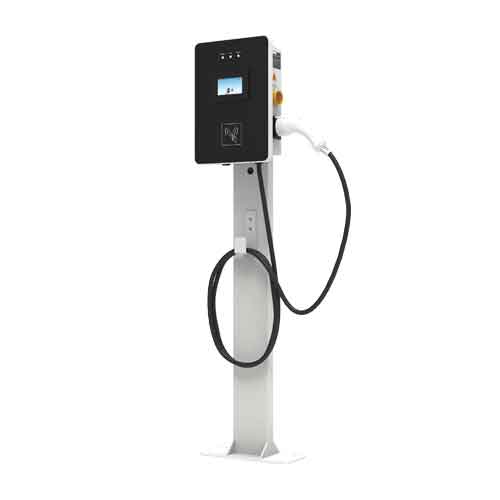
The charging infrastructure ecosystem is experiencing unprecedented architectural consolidation. Historically, AC chargers and isolated DC fast chargers operated independently, resulting in severe grid imbalances and fragmented fleet management. Today, the market has pivoted toward unified, multi-terminal charging ecosystems that bundle power storage, solar PV (Photovoltaic) generation, and smart distribution matrixes.
The standard transit corridors are adopting Megawatt Charging Systems capable of outputting >1000V and >1000A to charge class-8 logistics trucks and long-haul transport systems in under 20 minutes.
Intelligent, software-defined power matrices dynamically reallocate individual 20kW/30kW power modules to different dispensers based on the battery State of Charge (SoC) curve.
Modern platforms integrate local AI processing to predict insulation faults, connector wear, grid fluctuations, and thermal performance degradation in real-time, preventing unexpected downtime.
For procurement officers managing portfolios across municipal networks, industrial parks, or logistics hubs, purchasing charging hardware involves strict engineering vetting. Enterprise buyers optimize for total cost of ownership (TCO), interoperability, and long-term regulatory compliance.
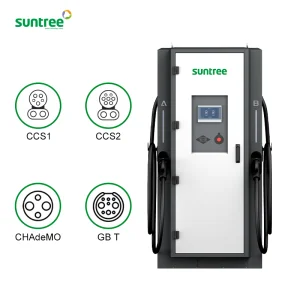
Global supply chain developers do not buy isolated products; they purchase integrated ecosystems. They demand compliance with regional protocols, such as CCS1, CCS2, GBT, and the newly standard NACS. High-capacity operations, especially heavy-duty fleet networks, analyze power factors, total harmonic distortion (THD), and standby power consumption metrics.
Furthermore, environmental durability plays an essential role. Systems must function flawlessly in extreme climates, from desert conditions to sub-zero temperatures. Shenzhen Vernon Charger integrates dual-loop cooling topologies, dust-filtration elements, and IP54/IP65 ratings into their systems to protect delicate power conversion components against moisture, saline environments, and micro-particles.
The competitiveness of Vernon Charger lies in the advanced automation of its Shenzhen production facilities. Operating under Factory 4.0 parameters, the assembly lines integrate robotic component placement, automatic optical inspection (AOI), and fully simulated high-voltage burn-in testing chambers.
This automated approach ensures that every single power module leaving the assembly line performs to nominal tolerances. By localizing component sourcing—including magnetic cores, high-grade silicon carbide (SiC) MOSFETs, and thermal interfaces within Shenzhen's industrial cluster—Vernon Charger guarantees stable delivery lead times even during global supply disruptions.
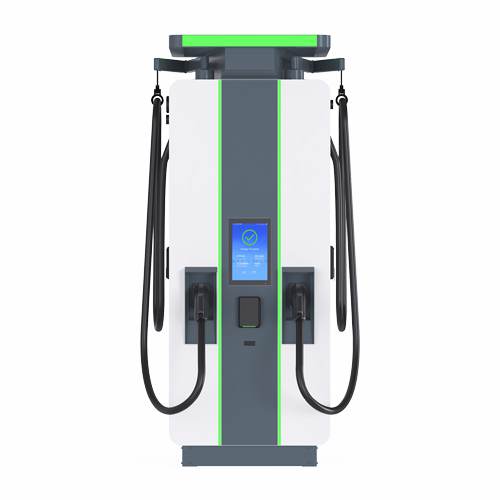
To demonstrate the versatile applications of integrated platforms, we analyze three specialized deployment scenarios designed to optimize capital allocation and structural efficiency:
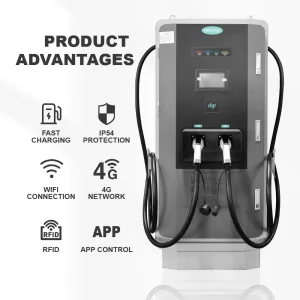
Deploying OEM/ODM 360kW Electric Heavy Truck Chargers with dynamic power distribution. By utilizing high-power CCS1/CCS2 outputs, fleet operators charge heavy duty assets in structured shift cycles.
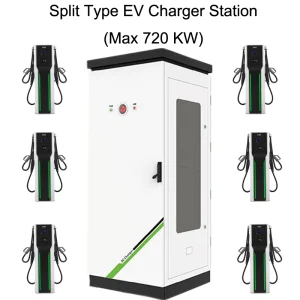
Utilizing advanced multi-terminal electric bus charging solutions. By separating the main rectifier cabinet from the terminal dispensers, agencies reduce installation footprints on busy platforms.
Integrating Bidirectional Power Modules with Smart Inverters. This configuration enables industrial facilities to feed power back to the local grid during peak periods, offsetting peak demand charges.
 Vernon Charger