Discover our flagship range of high-efficiency charging systems built with advanced Dynamic Load Management capabilities for commercial networks, fleets, and public facilities.
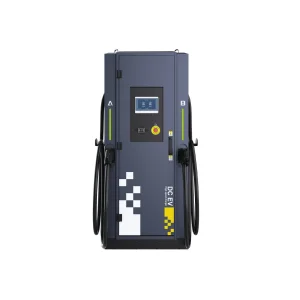
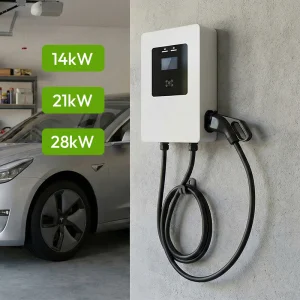
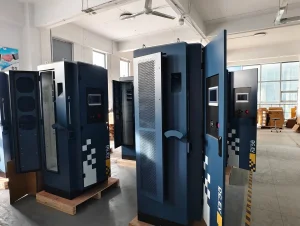
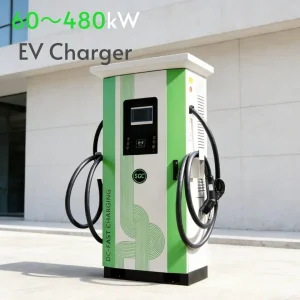
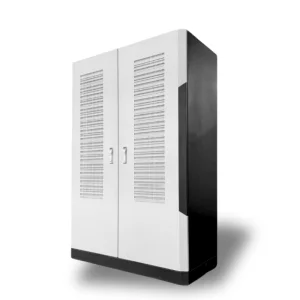
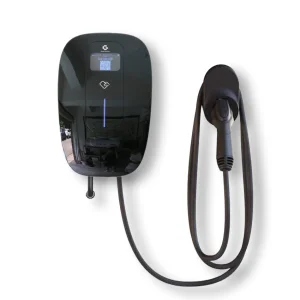
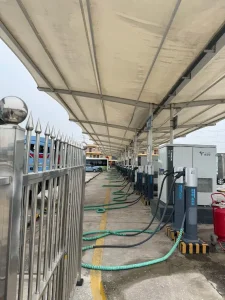
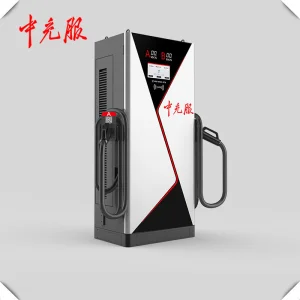
As global electric vehicle adoption reaches critical mass, charging infrastructure has transitioned from standalone plug-and-play units to highly integrated grid-edge systems. Traditional grid connection topologies are fundamentally limited: supplying static peak power simultaneously to multiple high-output DC chargers triggers grid strain, harmonic distortions, voltage drops, and ultimately, catastrophic circuit failures. Herein lies the core requirement for Dynamic Load Management (DLM) Solutions.
DLM utilizes intelligent software algorithms coupled with real-time hardware telemetry to distribute the available power supply dynamically across all active charging terminals. Unlike static configuration systems, which allocate a fixed power rating to every dispenser (for example, splitting a 240kW line into two rigid 120kW channels), DLM continuously samples grid availability, building consumption, and EV state of charge (SoC) data. It routes power where it is needed most, optimizing charging velocity and preventing peak demand surcharges.
Automatically throttles charger output during peak building electricity consumption periods to mitigate high peak-demand utility charges.
Calculates single-phase vs three-phase imbalances on the distribution network, instantly re-routing current allocation to stabilize the local grid.
Supports standard OCPP smart charging profiles, enabling seamless back-end integration with fleet management systems and virtual power plants (VPP).
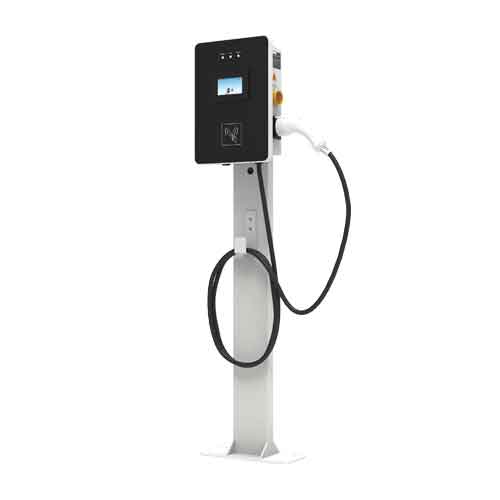
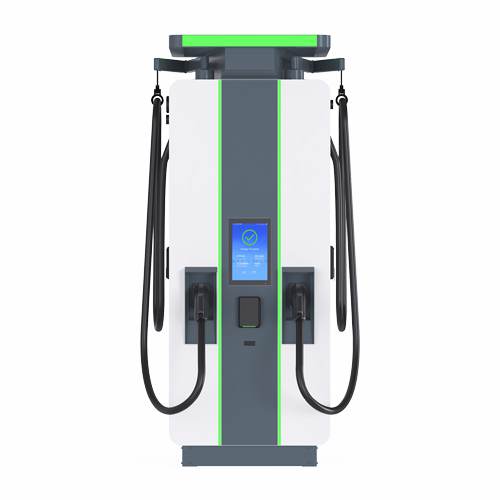
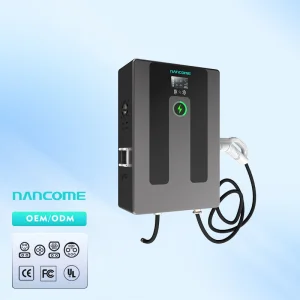
Shenzhen Vernon Charger Co., Ltd. is a pioneering manufacturer specializing in portable, wall-mounted, and ground-mounted DC EV chargers, providing comprehensive solutions for smart group charging, fleets, and public applications. The company focuses on delivering efficient, reliable, and intelligent charging systems designed to meet the diverse needs of residential, commercial, and industrial customers.
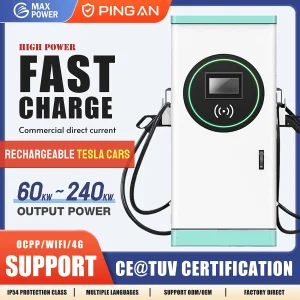
Vernon Charger’s product portfolio includes high-power DC fast chargers, portable charging units, wall-mounted and ground-mounted stations, and flexible group charging solutions. Each product incorporates advanced features such as intelligent power management, real-time monitoring, remote control, and energy optimization, ensuring safe, efficient, and user-friendly operation across multiple scenarios.
With rigorous adherence to international safety and quality standards, Shenzhen Vernon Charger Co., Ltd. has established itself as a trusted partner in the EV charging industry. By providing cutting-edge DC EV charging solutions, the company empowers clients to adopt cleaner transportation, improve operational efficiency, and contribute to a sustainable energy future.
The company is committed to innovation and sustainability, integrating its DC charging systems with renewable energy sources and smart grid technologies. This enables optimized load balancing, reduced operational costs, and enhanced energy efficiency for fleet operators, public charging networks, and private users alike.
China is the global powerhouse for Electric Vehicle Supply Equipment (EVSE), accounting for over 70% of worldwide manufacturing output. The dominance of Chinese factories in manufacturing Dynamic Load Management solutions stems from deep technological structural advantages:
Chinese DLM manufacturers operate alongside domestic power semiconductor fabs, controller developers, assembly plants, and software hubs. This proximity compresses lead times for custom control PCBs, CT clamps, and power factor correction (PFC) modules to under 4 weeks.
China's engineering talent pool enables factories to deploy large firmware development teams. They specialize in real-time embedded RTOS and communication protocols (Modbus, CAN bus, OCPP), allowing custom software adaptations without exorbitant licensing fees.
Leading factories like Vernon Charger maintain internal validation facilities certified by international bodies. Their systems comply with TUV Rheinland, CE, UL, CB, and UKCA standards, ensuring reliable global deployments.
As dynamic load allocation systems mature, three massive macro trends are altering the hardware/software requirements of these factory solutions:
Advanced DLM controllers are no longer restricted to throttling EV chargers relative to static grid limits. They now interface directly with onsite Battery Energy Storage Systems (BESS) and Solar PV inverters. During high solar generation, the system routes excess green energy to plugged vehicles. Conversely, during grid peak periods, the DLM controller triggers localized battery discharges to sustain high-power DC charging without relying on grid power.
Next-generation hardware incorporates bidirectional capabilities. Compliance with the ISO 15118-20 protocol is standard in modern factory designs, enabling Vehicle-to-Grid (V2G), Vehicle-to-Building (V2B), and advanced Plug & Charge authentication. DLM solutions act as local balancing masters to coordinate this power flow safely.
Rather than responding reactively to current spikes, AI-based software modules predict load curves. By analyzing weather forecasts, fleet scheduling matrices, and historic facility consumption profiles, the system dynamically reserves capacity, reducing latency in load distribution.
| Application Scenario | Core Technical Bottleneck | Dynamic Load Solution Approach | Achieved Economic/Operational ROI |
|---|---|---|---|
| Commercial Fleet Depots | Simultaneous plug-in of heavy e-trucks / buses exceeds distribution transformer headroom. | Sequence scheduling, dynamic power routing based on departure priority and real-time battery SoC. | Eliminates costly substation transformer upgrades; cuts peak utility charges by up to 40%. |
| Workplaces & Multi-Family Condos | Highly volatile residential/commercial background loads; unpredictable grid access times. | Integration of CT clamps at the main circuit breaker; dynamic throttling down to 6A per charger. | Ensures electrical safety compliance; permits maximum charger density under tight power budgets. |
| Highway Charging Hubs | Extreme demand fluctuations; high-capacity chargers requiring up to 360kW each. | Adaptive power-sharing matrices; dynamically allocating power module output in 20kW/30kW granularity increments. | Optimizes customer throughput; ensures fast-charging profiles are maintained even during peak site traffic. |
For global EPC contractors, CPOs (Charge Point Operators), and utility managers, sourcing dynamic load management solutions requires strict verification of safety, physical architecture, and digital interfaces.
Procuring companies must verify that DC fast chargers use internal isolated control loops, overcurrent protection relays, and Type B (30mA AC + 6mA DC) residual current devices (RCD). This isolates load management failures to prevent site-wide blackouts.
High-availability networks demand local load controllers that operate even during WAN network disruptions. Sourcing local DLM solutions utilizing Modbus RTU / TCP ensures uninterrupted hardware safety, regardless of cloud connectivity.
CPOs should seek solutions implementing OCPP Smart Charging profiles (TxProfile, ChargingProfile). This allows the central network to update charge rate limits remotely based on regional energy markets or utility demand response events.
Static Load Management divides a set electrical capacity equally and permanently between all installed charging connectors, regardless of whether they are active or what speed they require. Dynamic Load Management (DLM) monitors real-time building usage and EV power demands, continuously shifting the current limits between chargers. It maximizes available power allocation and safety, ensuring faster overall charge cycles.
A high-quality industrial DLM architecture utilizes local hardware controllers (edge devices) that communicate locally via Modbus RTU (serial) or Modbus TCP (Ethernet). If the internet connection fails, local communication remains functional. The chargers continue to balance the load safely based on live physical readings, though cloud-based data tracking and payment processing may pause.
Yes, professional Chinese EVSE manufacturers design their firmware to be fully compliant with standard OCPP 1.6JSON and OCPP 2.0.1 protocols. This allows products to integrate directly with major third-party Charging Station Management Systems (CSMS) like Greenlots, ChargePoint, AMPECO, and others, supporting immediate software configuration.
The system features layers of protection. In addition to firmware limitations, CT (Current Transformer) clamps or smart meters at the service entry read the overall building electrical draw. If the building approaches its capacity threshold, the system throttles the EV charging currents. Furthermore, physical safety relays trip if currents exceed safety margins for more than a fraction of a second.
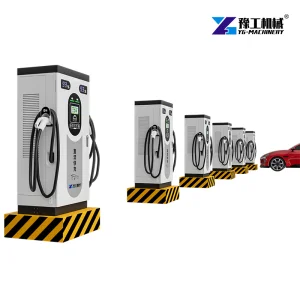
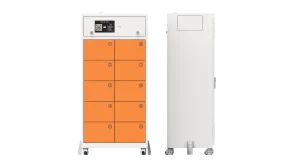
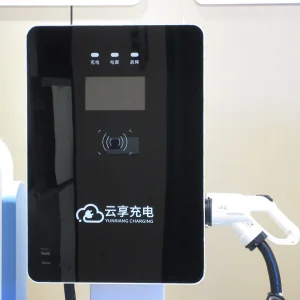
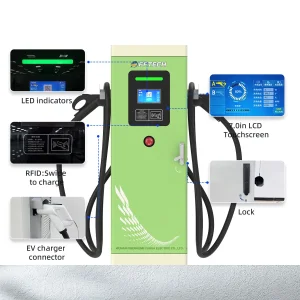
Examine our broader hardware lineup, including high-power fleet chargers, expandable battery cabinets, and residential smart chargers optimized for dynamic load-balancing integration.
 Vernon Charger