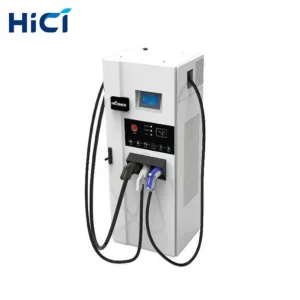
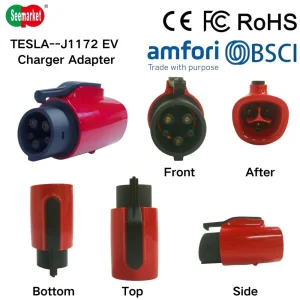
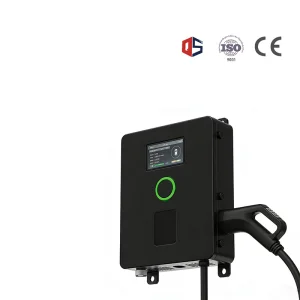
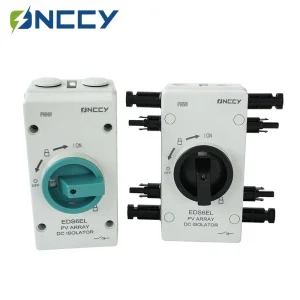
Explore our engineering-grade portfolio of scalable, high-efficiency DC fast chargers, portable energy systems, and intelligent power management architectures designed for global deployment.
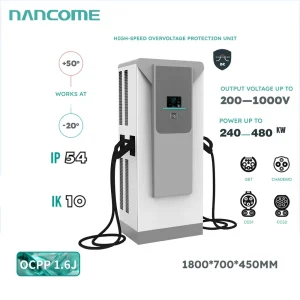
As global transport electrification accelerates, the demand for enterprise-grade, customizable DC fast-charging solutions has shifted from simple power delivery hardware to complex grid-interactive energy nodes. Charge Point Operators (CPOs), commercial fleet managers, and industrial site owners face unprecedented operational hurdles: escalating utility demand charges, regional regulatory fragmentations, multi-protocol interoperability, and aggressive uptime requirements (SLA > 99.5%).
To establish competitive advantages, top-tier customizable charging solutions manufacturers integrate Silicon Carbide (SiC) power modules, modular power stack architectures, dynamic load balancing algorithms, and open communication standards (OCPP 1.6J/2.0.1, ISO 15118). This technical whitepaper outlines the structural parameters, supply chain advantages, and custom-engineering frameworks necessary for deploying resilient, future-proof EV charging infrastructure globally.
Traditional EV charging architectures experience significant efficiency losses during partial-load cycles. Advanced customizable DC solutions utilize intelligent phase-shifting rectifiers and dynamic power module allocation, keeping conversion efficiency above 95% even down to 20% load factors, dramatically cutting lifetime operational expenses (OPEX).
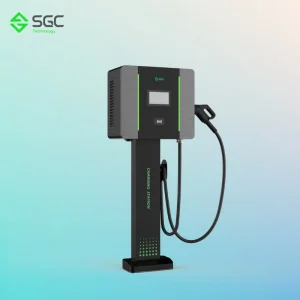
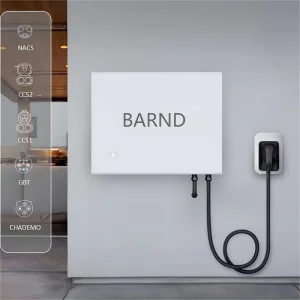
Shenzhen Vernon Charger Co., Ltd. is a pioneering manufacturer specializing in portable, wall-mounted, and ground-mounted DC EV chargers, providing comprehensive solutions for smart group charging, fleets, and public applications. The company focuses on delivering efficient, reliable, and intelligent charging systems designed to meet the diverse needs of residential, commercial, and industrial customers.
Vernon Charger’s product portfolio includes high-power DC fast chargers, portable charging units, wall-mounted and ground-mounted stations, and flexible group charging solutions. Each product incorporates advanced features such as intelligent power management, real-time monitoring, remote control, and energy optimization, ensuring safe, efficient, and user-friendly operation across multiple scenarios.
The company is committed to innovation and sustainability, integrating its DC charging systems with renewable energy sources and smart grid technologies. This enables optimized load balancing, reduced operational costs, and enhanced energy efficiency for fleet operators, public charging networks, and private users alike.
With rigorous adherence to international safety and quality standards, Shenzhen Vernon Charger Co., Ltd. has established itself as a trusted partner in the EV charging industry. By providing cutting-edge DC EV charging solutions, the company empowers clients to adopt cleaner transportation, improve operational efficiency, and contribute to a sustainable energy future.
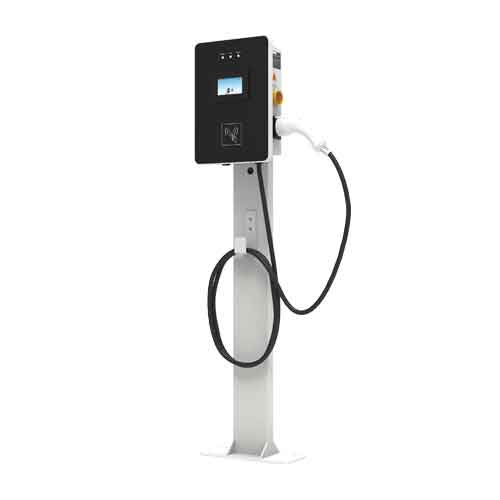
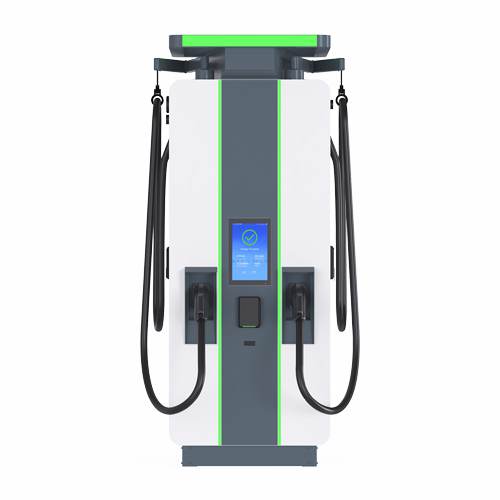
Customization in the EV charging domain extends far beyond simple white-labeling and localized aesthetics. Enterprise procurement departments require modular engineering flexibility across three critical layers: Hardware Architecture, Firmware/Software Protocols, and Environmental Adaptability.
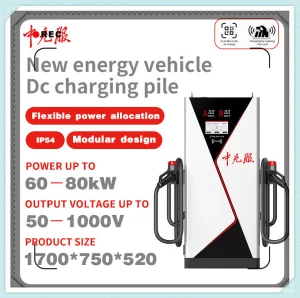
Customizable charging platforms leverage hot-swappable 20kW, 30kW, or 40kW power modules. This allows CPOs to scale charging cabinet capacity from 60kW up to 480kW incrementally, protecting initial capital investments while servicing evolving EV battery architectures (400V to 1000V platforms).
Full integration of ISO 15118 (Plug & Charge) and OCPP 1.6J / OCPP 2.0.1 backends guarantees seamless handshake capabilities with global CSMS platforms (such as ChargePoint, AWS IoT, Driivz). Custom firmware supports precise state-of-charge (SoC) throttling and local dynamic load management (DLM).
Heavy-duty structural enclosures customized for extreme environmental stresses. Features include anti-corrosion C5-M marine-grade coatings, IP55 dust/water protection, IK10 vandal-proof touchscreens, active air-ducting, or closed-loop liquid cooling systems tailored for ambient temperatures ranging from -35°C to +55°C.
| Parameter | Commercial Wallbox / Portable DC | Mid-Power Fleet Charging Stack | Ultra-Fast Highway Hubs (Liquid-Cooled) |
|---|---|---|---|
| Output Power Range | 20kW – 40kW | 60kW – 160kW | 240kW – 600kW+ |
| Output Voltage Range | 150VDC – 1000VDC | 200VDC – 1000VDC | 200VDC – 1000VDC |
| Connector Interface | CCS1, CCS2, NACS, GB/T | Dual CCS2 / Dual NACS / CHAdeMO | Liquid-Cooled CCS2 / High-Amp NACS |
| Peak Efficiency | ≥ 95.5% | ≥ 96.2% | ≥ 96.8% |
| Communication Protocol | OCPP 1.6J / Ethernet / 4G | OCPP 1.6J & 2.0.1 / CAN / 4G | OCPP 2.0.1 / ISO 15118 / PLC / Ethernet |
| Cooling Topology | Forced Air Cooling | Smart Air-Duct Cooling | Closed-Loop Liquid-to-Air Heat Exchanger |
The concentration of power electronics research, semiconductor fabrication, and precision hardware manufacturing in Shenzhen, China, provides unmatched structural advantages for international buyers seeking custom EV charging systems. Leveraging this dense industrial ecosystem enables manufacturers like Shenzhen Vernon Charger Co., Ltd. to accelerate R&D iteration cycles while maintaining stringent quality control and cost efficiencies.
Within a 50-kilometer radius of Shenzhen's industrial core lies the world's highest concentration of high-voltage relay suppliers, magnetic component manufacturers, power module designers, and cable assembly plants. This proximity reduces prototyping turnarounds from months to days, allowing rapid design modifications to client specification requests.
China-based Tier-1 export facilities implement multi-stage End-of-Line (EOL) testing protocols. Every customized charger undergoes full-load thermal imaging burn-in tests (48+ hours), insulation resistance checks under high humidity, lightning surge simulation (up to 6kV), and automated protocol verification against global EV simulators.
Mass volume manufacturing of core sub-assemblies—such as 1000V SiC conversion modules, mainboard controllers, and digital energy meters—enables high-capacity production with lower unit costs. Buyers benefit from premium components (e.g., Schneider contactors, Phoenix contacts, Texas Instruments DSPs) at highly competitive baseline prices.
Navigating international regulatory frameworks is critical for seamless deployment. Customizable charging hardware must comply with country-specific electrical grid codes, EMC emission targets, metering laws, and functional safety standards.
Full engineering compliance with UL 2202, UL 2594, and National Electrical Code (NEC) 625 specifications. Chargers tailored for North America feature integrated SAE J1772 and native NACS (SAE J3400) connectors, equipped with internal leakage current protection (CCID20) and Energy Star energy conservation ratings.
Strict alignment with CE RED directives, EN 61851-1, EN 61851-23, and Class B EMC interference suppression. For German-speaking regions, customized charging stations incorporate MID-certified energy meters and hardware compliant with German Calibration Law (Eichrecht) for transparent user billing.
Custom power input stages engineered to handle local grid variances: 3-phase 400V (±15%) for EMEA, 3-phase 480V for US industrial installations, and specialized step-down transformers for 208V/240V regional grids, complete with programmable power factor correction (PFC > 0.99).
Customizable charging equipment is engineered to thrive across diverse business verticals and environmental challenges. Below are key field deployment architectures optimized for operational profitability and grid resilience.
Heavy-duty transport fleets require scheduled, overnight high-density charging. Utilizing dynamic power distribution cabinets paired with 20kW-40kW wall-mounted or portable DC units allows depot managers to sequentially route power based on vehicle departure schedules, avoiding peak demand tariffs.
Public travel plazas demand high turnover speed. Deploying 320kW to 600kW liquid-cooled charging stacks enables passenger EVs to add 200km of driving range within 8-10 minutes. Dual-port configurations dynamically allocate up to 300kW per output based on battery capability.
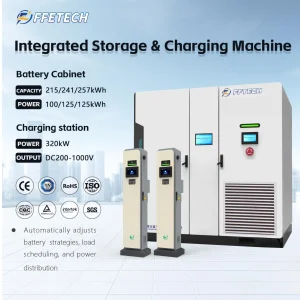
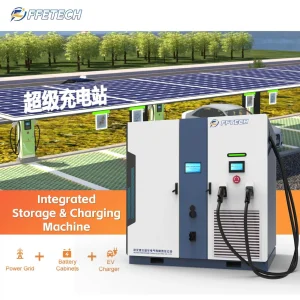
Locations with constrained grid access utilize integrated solar PV and energy storage systems (ESS). Custom charging nodes feature dual-directional DC-DC converters, pulling power directly from solar energy arrays and battery storage banks to charge vehicles without triggering utility transformer upgrades.
To prevent asset obsolescence, customizable charging manufacturers integrate emerging technical frameworks directly into current-generation product designs.
Next-gen systems leverage V2G protocols governed by ISO 15118-20, allowing electric vehicle fleets to act as distributed energy resources (DERs). EV batteries store low-cost renewable energy and feed power back into the grid during peak load hours, creating new revenue streams for fleet operators.
Embedded IoT sensors monitor high-frequency voltage ripple, module temperature profiles, cable contact degradation, and fan speed anomalies. AI diagnostic engines process telemetry in real-time, predicting component failure up to 14 days before downtime occurs.
Transitioning from silicon IGBTs to wide-bandgap SiC MOSFETs elevates conversion efficiency past 97% while enabling higher switching frequencies. This reduces magnetic component size by 40%, shrinking overall cabinet footprint while reducing heat dissipation needs.
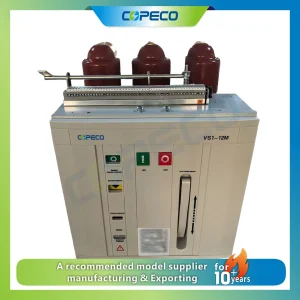
Explore our specialized range of high-capacity DC power units, vacuum circuit breakers, multi-port quick chargers, and safe switching devices designed for commercial electrification projects.
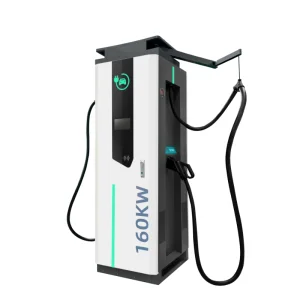
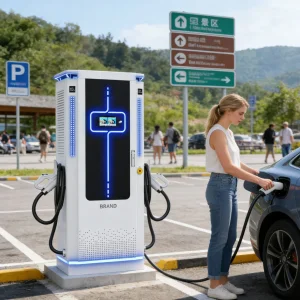
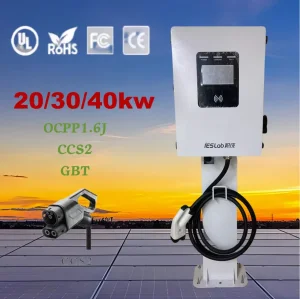
Comprehensive engineering insights for procurement directors, system integrators, and charge point operators looking to partner with China manufacturers.
For standard cabinet customization (vinyl wraps, custom RAL powder coating colors, and digital screen logo branding), MOQs typically start at 5 to 10 units. For structural sheet metal engineering modifications or custom PCB control board revisions, MOQs vary depending on component lead times and tooling requirements.
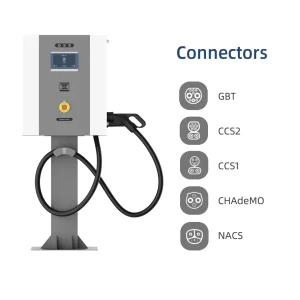
Our charging systems utilize modular controller area network (CAN) switching architectures paired with universal communication controller boards (SECC). This setup supports flexible dual-gun configurations (e.g., CCS2 + NACS or CCS1 + CHAdeMO), dynamically switching protocol handshakes (DIN 70121, ISO 15118, SAE J1772) based on the vehicle connected.
Dynamic Load Management allows a group of DC chargers to share a fixed grid power capacity. An integrated local Energy Management System (EMS) monitors total site load in real-time, instantly redistributing available kW output across active vehicles based on battery SoC, priority charging tier, or departure schedules without exceeding grid limits.
For power outputs above 240kW, units employ independent thermal separation channels. Air-cooled rectifiers draw air from isolated front intake vents and expel heat via rear ducts, preventing dust contact with sensitive electronics. Ultra-fast systems above 360kW utilize closed-loop liquid-cooling units circulating glycol coolant through liquid-cooled charging cables to prevent connector overheating.
All units natively support OCPP 1.6J and OCPP 2.0.1 Over-The-Air (OTA) commands. Operators can remotely push firmware updates, reset fault logs, adjust output current limits, and diagnose component status (rectifiers, relays, temperature sensors) via cloud CSMS software without dispatching field technicians.
 Vernon Charger