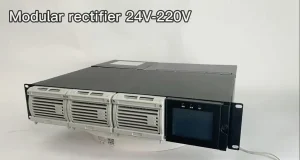
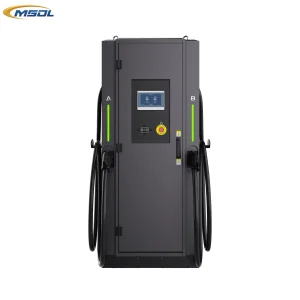
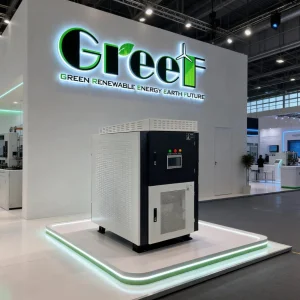
Engineered for high-intensity duty cycles, rapid turnaround times, and robust outdoor environmental standards.
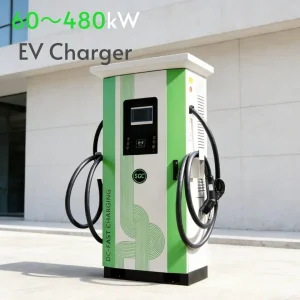
Shenzhen Vernon Charger Co., Ltd. is a pioneering manufacturer specializing in portable, wall-mounted, and ground-mounted DC EV chargers, providing comprehensive solutions for smart group charging, fleets, and public applications. The company focuses on delivering efficient, reliable, and intelligent charging systems designed to meet the diverse needs of residential, commercial, and industrial customers.
By leveraging vertically integrated production lines, Shenzhen Vernon Charger Co., Ltd. guarantees unparalleled agility. Our capacity enables rapid turnaround from prototyping to volume production. This ensures that logistics exporters and global distribution partners can scale fleet operations smoothly while maintaining strict cost boundaries.
Addressing the critical grid integration challenges, peak demand penalties, and high-frequency charging cycles in commercial freight networks.
Global logistics corridors operate on razor-thin margins and strict timetables. Transitioning medium- and heavy-duty vehicles (MHDVs) to electric requires a drastic shift in site energy management. Traditional fleet yards cannot simply plug in dozens of high-power vehicles without triggering massive peak demand penalties from regional grids.
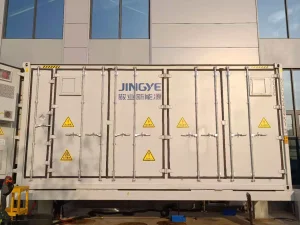
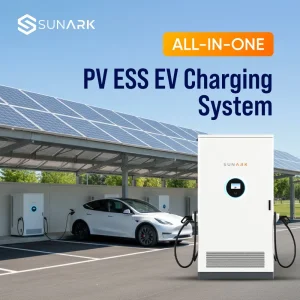
By pairing high-power chargers with localized battery energy storage systems (BESS), logistics hubs store off-peak electricity and discharge it during peak fleet arrivals, reducing demand charges up to 40%.
Our algorithms continuously allocate the available current among active charging dispensers based on battery state-of-charge (SoC), scheduled departure times, and overall building electrical loads.
Through OCPP 1.6J/2.0.1 compliance, our systems talk directly to transportation management software (TMS), scheduling charges when electricity tariffs are lowest and verifying fleet readiness.
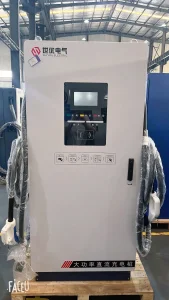
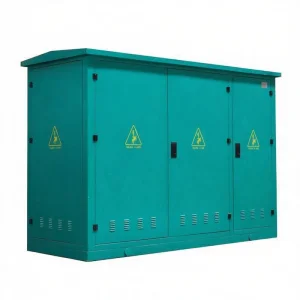
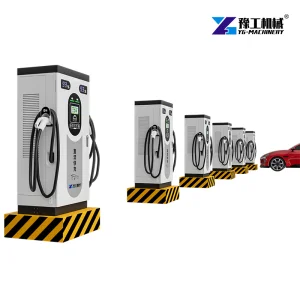
SEO Insight & Information Gain: When deploying charging yards for e-trucks, calculating the "Total Cost of Ownership" requires optimizing high charging speeds against utility supply limitations. Vernon's integrated solutions allow a single 360kW power cabinet to split load dynamically across up to four satellite dispensers, significantly lowering initial hardware and site preparation investments.
Strategic advancements pushing the envelope in liquid-cooled power density, Megawatt Charging Systems (MCS), and grid-interactive infrastructure.
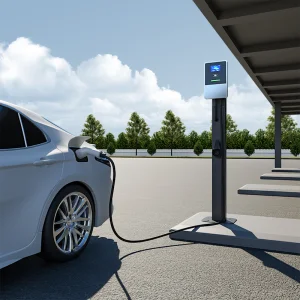
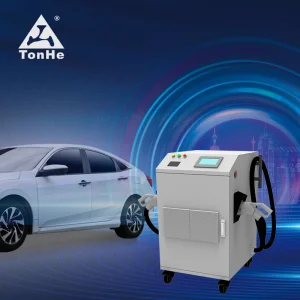
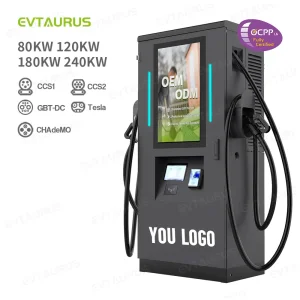
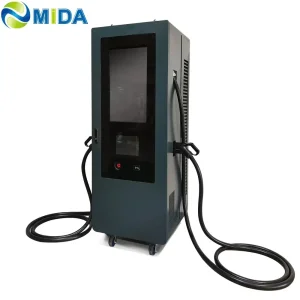
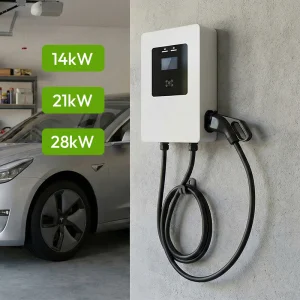
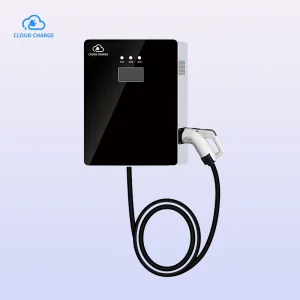
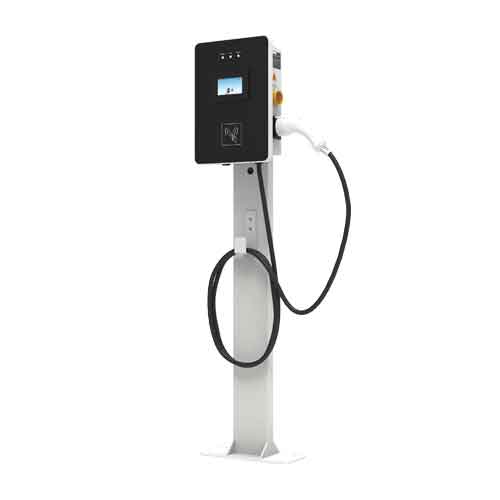
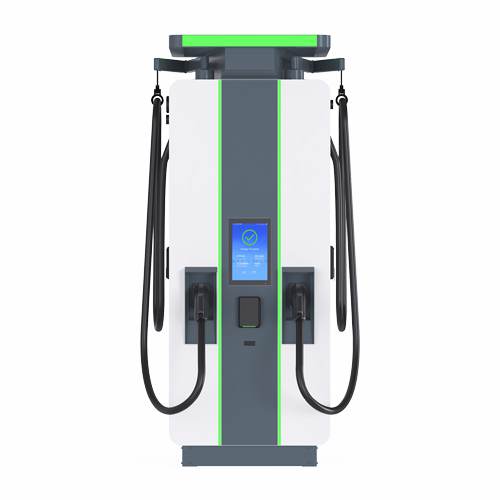
Vernon Charger’s product portfolio includes high-power DC fast chargers, portable charging units, wall-mounted and ground-mounted stations, and flexible group charging solutions. Each product incorporates advanced features such as intelligent power management, real-time monitoring, remote control, and energy optimization, ensuring safe, efficient, and user-friendly operation across multiple scenarios.
Looking to the next decade, our technology roadmap emphasizes transition to next-generation silicon carbide (SiC) semiconductor modules, driving converter efficiency to 97.5%. Simultaneously, we are actively standardizing hardware interfaces for Megawatt Charging Systems (MCS) designed to transfer energy at up to 3,000 Amps, reducing class-8 heavy-duty truck charging times to under 20 minutes.
Establishing native security certificates on vehicle-to-grid communications to allow instant authentication, secure billing, and automated charging initiation without manual keycards or applications.
Transforming parked logistics vehicles into distributed grid resources. During peak system strains, commercial fleets discharge auxiliary power back into the microgrid, creating new revenue streams.
Allowing ultra-high currents (>500A) to pass through standard-diameter cables without thermal runaway risk, reducing weight for vehicle operators and maximizing long-term safety.
Ensuring vertical manufacturing integration and strict production standards to insulate our global clients from market disruptions.
The global EV infrastructure market demands not only high-quality technology but also a bulletproof supply chain. Operating out of Shenzhen, Vernon Charger integrates complete hardware assembly, software development, structural testing, and system-level validation under one roof. Our state-of-the-art facility uses intelligent ERP and MES software tracking system parameters down to the torque applied on individual busbars.
| Manufacturing Element | Technical Specification / Standard | Logistics Impact & Benefit |
|---|---|---|
| Power Module Isolation | Dual-chamber physical isolation design (IP54 / IP55 rated) | Prevents dust and metallic particles from entering sensitive control electronics, reducing downtime. |
| Integrated Testing | 100% full-load burn-in testing at 50°C ambient temperature | Detects early component wear-out before shipping, lowering RMA rates below 0.2%. |
| Software Protocol | Compliance with OCPP 1.6J, OCPP 2.0.1, & ISO 15118-20 | Ensures seamless integration with third-party software platforms globally. |
| BMS Protection | Over/under voltage, surge suppression (Class C/D), short circuit protection | Protects fleet assets from voltage spikes, minimizing high-value battery wear. |
The company is committed to innovation and sustainability, integrating its DC charging systems with renewable energy sources and smart grid technologies. This enables optimized load balancing, reduced operational costs, and enhanced energy efficiency for fleet operators, public charging networks, and private users alike.
How procurement officers and exporters structure tenders for heavy-duty EV charging systems.
Navigating large-scale electric fleet investments requires a clear procurement framework. Exporters and logistics suppliers must evaluate several critical criteria during their sourcing stages:
With rigorous adherence to international safety and quality standards, Shenzhen Vernon Charger Co., Ltd. has established itself as a trusted partner in the EV charging industry. By providing cutting-edge DC EV charging solutions, the company empowers clients to adopt cleaner transportation, improve operational efficiency, and contribute to a sustainable energy future.
Ensure your selected OEM/ODM manufacturer supplies the following components:
Ensuring localized grid compatibility, compliance with international safety protocols, and long-term regulatory approval.
Logistics operators must navigate a complex array of local grid codes and safety rules when expanding EV corridors globally. Vernon Charger ensures compliance by conducting comprehensive simulations and pre-certifications for targeted geographical regions:
UL 2202 and UL 2231 standards for fast charging equipment, alongside FCC Class A/B electromagnetic interference testing, ensuring smooth permitting and grid connection.
CE-LVD and CE-EMC compliance, alongside support for German Eichrecht calibration regulations, enabling public charging transactions.
Compliance with regional requirements in Australia, New Zealand, and mainland Asian hubs, including standard interfaces and communication protocols.
Essential insights for engineering, procurement, and operations teams planning fleet electrification projects.
Dynamic power allocation enables active sharing of a central power cabinet's capacity across multiple satellites. For example, if a 360kW power source is paired with three vehicles, the system splits power into increments of 120kW per vehicle. As one vehicle finishes and its power demand drops, the system dynamically reroutes the excess capacity to the remaining trucks. This approach optimizes fleet charging efficiency, limits peak demand spikes, and minimizes utility upgrade requirements.
Our standard manufacturing schedule ranges from 4 to 6 weeks for volume orders. This timeline includes structural branding, color matching, and custom OCPP integration. For custom developments requiring unique electrical configurations, our engineering team works directly with clients to finalize designs and build prototypes within 8 to 12 weeks.
BESS, such as our 5.015MWh liquid-cooled unit, acts as an energy buffer. It stores electricity during off-peak times (or from local solar setups) and discharges it during high-demand vehicle arrivals. This buffering reduces grid stress, provides reliable backup power during outages, and shields fleet operations from expensive demand charges.
Yes. Our latest DC charging platforms support OCPP 2.0.1 and ISO 15118. This compatibility provides secure bidirectional communication, dynamic billing verification, Plug & Charge convenience, and easy integration with modern fleet telematics software.
Liquid cooling provides efficient temperature management, allowing stations to run reliably in hot climates (up to 55°C) and cold environments (down to -35°C). The sealed electronics chamber prevents failures from dust, humidity, and chemical contaminants, lowering long-term maintenance costs.
Deploying smart charging configurations for commercial fleets, parking facilities, and high-voltage grid connections.
 Vernon Charger