Why Do Multiple DC Chargers Need Load Balancing?

Time:2026-11-11 Author:Sienna
0%

Why do multiple DC chargers need load balancing? A site with several fast chargers may seem ready for every arriving vehicle, yet its shared electrical supply has limits. When three drivers plug in at once, each charger can request substantial power. Without coordinated control, the site may exceed its available capacity, trigger protective limits, or distribute power unevenly. Not ideal.

Load balancing monitors available power and adjusts charger output as demand changes. It can prioritize active sessions, share capacity, or reserve power for other building loads. For example, a site with 300 kW available for charging might direct more power to a vehicle leaving soon and less to one parked longer. The right allocation depends on charger capabilities, grid limits, vehicle acceptance rates, and operator goals. A dashboard reading alone is not enough. Commissioning and regular checks matter.

How to balance load across multiple DC chargers is a practical design question, not just a software feature. Operators should confirm electrical headroom, set allocation rules, and test what happens when chargers connect or disconnect unexpectedly. They should also verify that meter readings and charger communications remain reliable. Small gaps can matter. Still, load balancing cannot create extra grid capacity, and an equal split is not always useful. That distinction is easy to overlook. The discussion ahead examines why coordinated charging supports reliable site operation, which components it requires, and what trade-offs deserve review. Every site differs, so validate the setup against measured demand rather than assuming a brochure tells the whole story.
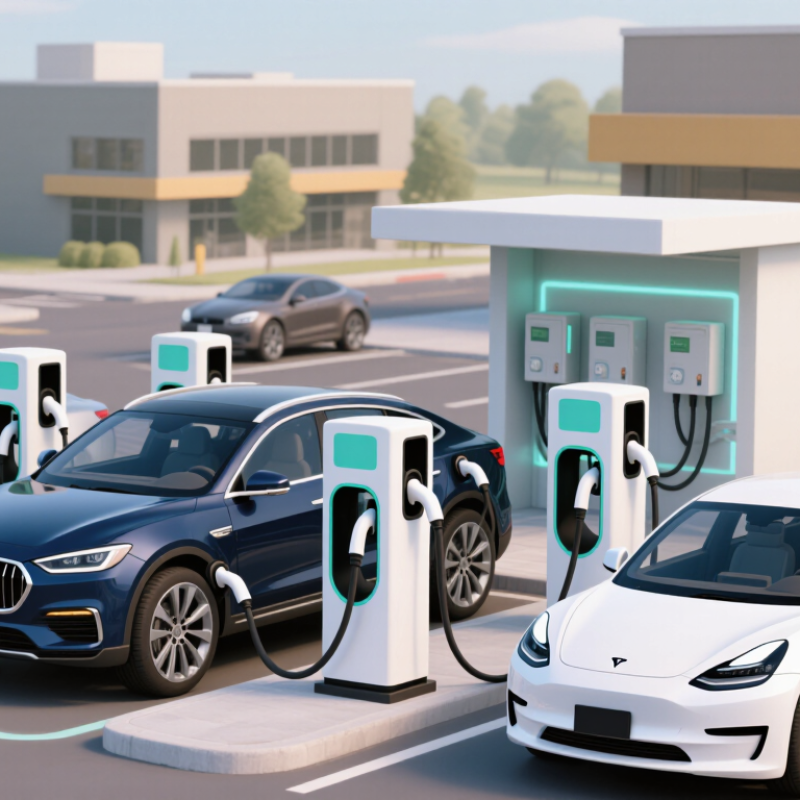
Why Do Multiple DC Chargers Need Load Balancing?

What Load Balancing Means for Multiple DC Chargers

Load balancing means sharing a site’s available electrical capacity among several DC chargers in real time. It is not simply splitting power equally. A charger may deliver more to a vehicle that can accept it, while reducing output to another whose battery is nearly full. The controller must also respect the site’s power limit.

Picture four charging bays connected to a shared 600-kilowatt supply. One vehicle arrives with a low state of charge; another is already tapering its charge. A load-balancing system can shift capacity between them instead of reserving fixed power for every bay. That matters. The International Energy Agency’s Global EV Outlook 2024 reports that public charging points grew by more than 40% in 2023, while fast chargers grew by 55%. More simultaneous charging can make capacity coordination important, especially at busy depots and highway sites.

Effective balancing depends on more than software. The chargers, power cabinets, site connection, and control system must communicate reliably. Operators should check whether the system reallocates power quickly and what happens during a communication fault. Equal sharing may seem fair, but it can waste capacity when vehicles have different charging needs. Still, allocation is not perfectly predictable: vehicle limits, temperature, and battery condition can change demand during a session.

How Chargers Share Power Across Connected Vehicles

When several DC chargers serve one site, each plug is not automatically backed by a separate full-power supply. A shared cabinet or site controller distributes available power within the site’s grid limit. The vehicle’s battery-management system communicates its charging needs, while charger capacity, cable temperature, and battery condition also shape the rate. Equal is not optimal. A vehicle at low charge may accept 180 kW, while a nearly full battery may taper sharply. Giving both vehicles 150 kW can leave usable capacity idle.

This coordination matters as charging networks expand.

The International Energy Agency’s Global EV Outlook 2024 reports that public charging points grew by more than 40% in 2023, while fast chargers grew by about 55%.

More plugs do not automatically mean more simultaneous power. A 600-kW site serving three vehicles might allocate 250, 200, and 150 kW, then adjust those shares as demand changes. These figures are illustrative, not a universal split: some systems share cabinet power, while others enforce a site-wide limit.

One awkward detail is that allocation depends on accurate measurements and responsive controls. Drivers may see power rise or fall during a session. That can be confusing, but it helps keep vehicles charging without exceeding the site’s supply.

Why Load Balancing Is Needed at Charging Sites

A charging site rarely has unlimited electrical capacity. Its grid connection, transformer, and switchgear set a practical ceiling on power. When several DC chargers operate together, their combined demand can approach that limit quickly. Load balancing helps keep total site consumption within the available capacity.

The system can adjust charger output as vehicles arrive, depart, or change their charging rate. For example, one vehicle may accept 150 kilowatts, while another slows as its battery fills. A controller can direct more power to the first vehicle without exceeding the site limit. This can reduce costly peak demand and make better use of existing electrical infrastructure. Small changes matter.

Without coordination, chargers may compete for the same capacity. The result can be reduced output, unexpected power limits, or pressure to upgrade the site connection sooner. Still, load balancing cannot create energy that the grid does not supply. Its performance depends on accurate measurements, reliable communications, and sensible settings. A brief communication fault can expose weaknesses in the design, so fallback behavior deserves careful testing. Operators should also review real charging data; assumptions about arrival patterns are not always right.

How a DC Charger Load-Balancing System Works

A DC charger load-balancing system shares a site’s available electrical power among several charging stalls. A controller monitors the connection’s power limit and receives updates from each charger. Those updates may include a vehicle’s requested power, battery condition, and the charger’s operating status. The controller then adjusts each unit’s output, rather than allowing every charger to draw its maximum at once.

Power can shift as charging sessions change. One vehicle may arrive with a low battery and accept a high rate, while another is nearing full and naturally draws less. The controller can redirect that unused capacity within the site limit. Small changes add up. Safety limits still matter: charger ratings, cable temperature, and electrical conditions constrain how much power each stall can receive. If a charger reports a fault, the system can reduce or stop its output.

In practice, balancing is not magic. A vehicle may request less power than expected, and communication delays can make the allocation less precise for a moment. Operators should check real charging data and set clear priorities, such as minimum power for active sessions. The goal is steady, safe use of shared capacity—not identical charging speeds for every car.

Factors That Influence Power Distribution Between Chargers

Power distribution begins with the site’s electrical limit, not the number printed on each charger.

A 600 kW connection cannot deliver 150 kW to six vehicles at once. The controller must share available power while respecting transformer capacity, cable ratings, and charger limits. The U.S. Department of Energy’s Alternative Fuels Data Center lists typical DC fast-charging equipment ratings from 50 kW to 350 kW. That wide range makes the site’s design important.

Vehicle demand changes the split, too. A car arriving with a low battery may accept high power, then taper as its battery fills. Cold batteries can also charge more slowly. So two vehicles at identical chargers may draw very different amounts.

It varies. Charger software can redirect spare capacity to another vehicle, but only within hardware and connection limits. Real sites are messier.

Usage patterns also matter. The International Energy Agency’s Global EV Outlook 2024 reported that public fast-charger numbers grew by about 55% in 2023. More simultaneous sessions make peak demand harder to manage.

Operators may set priorities, reserve power for a vehicle nearing departure, or limit total site output during busy periods. These choices affect waiting time as well as energy costs. The calculation is not always elegant; a perfectly equal split may waste power when one car cannot accept its share.

FAQS

Do multiple chargers at one site each receive full power?

No. A shared cabinet or controller may divide available power among vehicles.

How does a site decide each vehicle’s power share?

It considers battery needs, charger capacity, cable temperature, and battery condition. The split can change during charging.

Why might two vehicles receive different power levels?

A low-charge vehicle may accept more power. A nearly full battery often charges more slowly.

Can a site redistribute power during a charging session?

Yes. If one vehicle slows down, a controller may send more power to another. Small changes matter.

What limits the total power available at a charging site?

The grid connection, transformer, and switchgear set practical limits. More plugs do not guarantee more power.

What could happen without load balancing?

Chargers may compete for capacity, causing lower output or unexpected power limits. Not ideal.

Does load balancing create extra electricity?

No. It manages the power already available and cannot exceed the site’s supply.

Why might the power shown on a charger rise or fall?

Vehicle demand and site conditions change. The shifting display can feel confusing, even when the system is working as intended.

What should operators check when setting up power sharing?

They should test communication failures, review real charging data, and check fallback behavior. Arrival patterns can surprise them.

Conclusion

Load balancing allows multiple DC chargers to share a site’s available electrical capacity instead of each operating independently at full power. When several vehicles are connected, the system distributes power among them so charging can continue without exceeding the supply limit. A vehicle with a greater immediate need may receive more power, while available capacity can be reassigned as vehicles finish charging or their demand changes.

Understanding How to balance load across multiple DC chargers helps charging sites use their electrical infrastructure efficiently and serve more vehicles at once. A load-balancing system monitors total site capacity, charger demand, and each vehicle’s charging requirements, then adjusts power allocation in real time. The distribution can be influenced by factors such as the number of connected vehicles, their battery state, charger limits, and the site’s available power. By coordinating these factors, load balancing can reduce unnecessary capacity strain and provide a more consistent charging experience.

Sienna

Sienna

Sienna is a skilled marketing professional with a deep expertise in our company’s core products and services. With a passion for innovation and detail, she plays a pivotal role in crafting insightful blog posts that not only highlight the unique features of our offerings but also provide valuable......