In the evolving world of electric vehicles (EVs), understanding "How DC chargers differ from AC chargers" is crucial. Industry expert Dr. Laura Simmons, a leading figure in EV charging technology, emphasizes, "DC chargers provide faster charging, making them essential for modern electric infrastructure." This insight sheds light on the growing preference for DC chargers among consumers and manufacturers alike.
DC chargers utilize direct current, allowing for rapid energy transfer. In contrast, AC chargers use alternating current, which can be slower due to the conversion process required for EV batteries. This fundamental difference affects charging times and user experience. Consumers may often overlook these details, but their understanding is vital for making informed decisions about their charging options.
Moreover, environmental factors and accessibility play significant roles in charger choice. While many public charging stations offer AC options, the rise of DC fast chargers is reshaping the landscape. Yet, not all locations can support DC infrastructure, leading to potential gaps in service. As the industry moves forward, consumers must critically evaluate their charging needs and preferences.
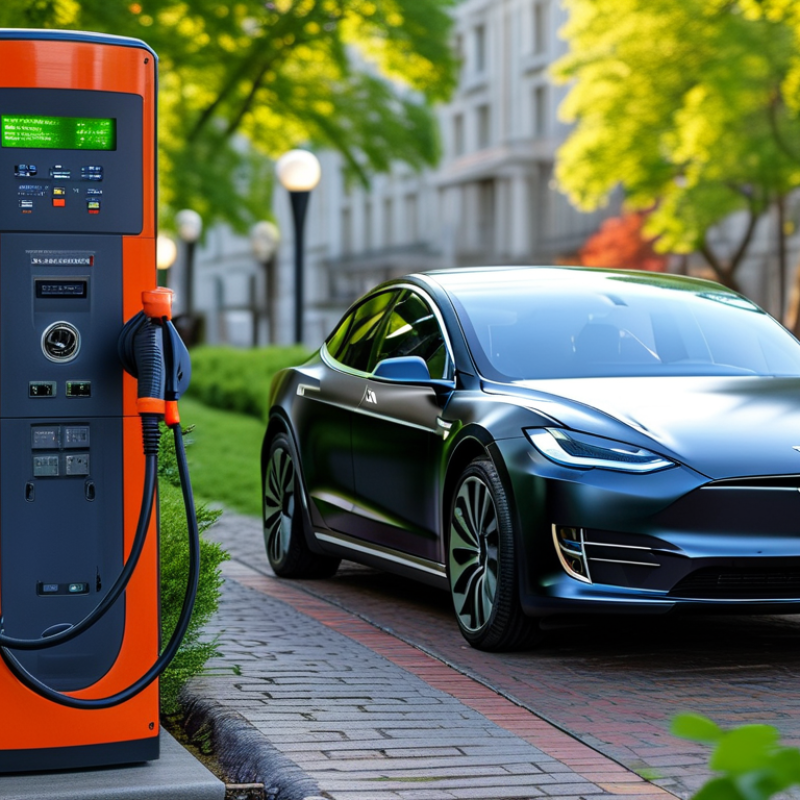
Overview of DC Chargers and AC Chargers
DC chargers and AC chargers serve distinct purposes in the electric vehicle (EV) ecosystem. A DC charger delivers direct current to the vehicle's battery, allowing for much faster charging speeds compared to AC chargers, which provide alternating current. According to a report by the International Energy Agency (IEA), DC chargers can charge an EV to 80% in just 30 minutes, while AC chargers typically take several hours for a full charge.
The design and infrastructure also differ significantly. DC chargers require specialized equipment due to their high voltage output, suitable for fast charging stations. In contrast, AC chargers can often use standard electrical outlets, making them more accessible for home charging. As of 2023, statistics show that over 75% of charging stations worldwide are AC chargers, indicating their importance for daily use despite being slower.
Tips: If you're considering a home charging setup, assess your daily driving range. For frequent long trips, investing in a DC charger might be worthwhile. However, for regular use, an AC charger is likely sufficient. Always ensure your electrical system supports the charger types you choose. Understanding these differences can lead to smarter charging decisions.
Technical Differences: Power Delivery Method
When comparing DC and AC chargers, the power delivery method stands out as a key distinction. DC chargers supply direct current, which allows for faster charging times. According to the International Energy Agency, DC fast chargers can deliver power levels ranging from 50 kW to 350 kW. This capability enables the rapid charging of electric vehicles in as little as 30 minutes. In contrast, AC chargers typically provide power at lower levels, usually between 3.7 kW and 22 kW. As a result, the charging process can take several hours, making them suitable for home use or workplaces.
The difference in charging times highlights a significant advantage of DC technology. Users often prefer shorter charging durations, especially in public charging stations. A report from Bloomberg New Energy Finance indicates that over 70% of EV users prioritize charging speed when selecting a charging station. However, many still face the challenge of limited DC charger availability, particularly in urban areas. While DC chargers are becoming more widespread, they are not yet as common as their AC counterparts. This availability issue may lead to longer wait times and reduced convenience for users relying on fast charging options.
Top 10 Differences Between DC Chargers and AC Chargers
| Feature |
DC Chargers |
AC Chargers |
| Power Delivery Method |
Direct current (DC) supplied directly to the vehicle |
Alternating current (AC) converted to DC within the vehicle |
| Charging Speed |
Fast charging, typically 15-30 minutes for a significant charge |
Slower charging, often several hours for a full charge |
| Common Use Cases |
Public fast-charging stations along highways |
Home charging or public charging in urban areas |
| Infrastructure Cost |
Higher upfront cost for installation |
Lower initial setup cost |
| Compatibility |
Usually compatible with fast-charge capable vehicles |
Widely compatible with most electric vehicles |
| Output Voltage |
Higher voltage output, can be over 400V |
Typically around 240V |
| Charger Size |
Larger and bulkier due to power electronics |
More compact and lightweight |
| User Experience |
Quick and efficient; less waiting time |
Longer wait times, typically used overnight |
| Maintenance |
Requires more specialized maintenance |
Generally lower maintenance requirements |
| Market Adoption |
Increasingly adopted for fast charging networks |
Widely used by consumers for home charging |
Charging Speed Comparison: DC vs. AC
When comparing charging speeds, DC chargers significantly outperform AC chargers. According to a report by the International Energy Agency, DC fast chargers can provide up to 80% charge in just 30 minutes. In contrast, standard AC Level 2 chargers typically take several hours to fully charge a vehicle. This stark difference highlights the efficiency of DC charging for electric vehicles.
AC chargers supply power more slowly because they convert AC to DC within the vehicle. This process includes a built-in inverter that adds time. For example, a Level 2 AC charger might deliver about 6.6 kW, resulting in long charging sessions. In a busy environment where time is crucial, this could be a significant drawback.
Moreover, a study from the U.S. Department of Energy emphasizes that DC charging stations are essential for long-distance travel. EV drivers often seek quick, reliable, high-speed charging options. Meanwhile, the charging infrastructure for AC remains prevalent in residential areas. This can lead to uneven distribution in charging availability. As we expand our electric vehicle networks, it is vital to recognize these differences and find a balance for all types of users.
Applications and Use Cases for DC and AC Chargers
DC chargers and AC chargers serve distinct roles in the growing electric vehicle (EV) ecosystem. DC chargers are mainly used for fast charging in public spaces. They convert AC power to DC power, allowing for quicker charging. This makes them ideal for rapid charging stations along highways. Users can benefit from high charging speeds. However, these chargers can be more costly and less convenient for home use.
On the other hand, AC chargers are commonly used for home and office charging. They are usually less expensive and simpler to install. Many EV owners rely on them since they can charge vehicles overnight. While the charging time is longer, the process is generally more accessible. AC chargers also support various types of EVs and offer versatility for everyday use.
Choosing between DC and AC chargers often depends on individual needs. If speed is vital, DC is the right choice. However, if regular and slower charging fits better with daily routines, AC is advantageous. Assessing charging needs is essential. Reflect on your driving habits and charging locations before making a decision.
Cost Analysis: DC Chargers versus AC Chargers
When analyzing the costs of DC chargers versus AC chargers, several factors come into play.
DC chargers generally have a higher initial purchase cost, ranging from $10,000 to $40,000, compared to AC chargers, which typically cost between $3,000 and $10,000.
However, the higher upfront investment in DC technology can yield quicker charging times. According to a report by the International Energy Agency (IEA), DC chargers can deliver power at a rate of up to 350 kW, enabling a full battery charge in as little as 20 to 30 minutes.
Operational costs also vary significantly. For commercial chargers, maintenance for DC units tends to be more expensive due to their complex electronics and cooling systems.
In contrast, AC chargers often require less rigorous upkeep, thus representing a more cost-effective long-term option. Research from BloombergNEF suggests that as electric vehicle adoption increases, the total cost of ownership for both types of chargers is likely to shift.
Although AC chargers have traditionally been seen as the cheaper option, their slower charging times could deter users, leading to potential revenue losses for operators.
Site preparation and installation costs are another vital consideration.
DC charging stations may need more substantial infrastructure upgrades, which can add thousands in expenses. AC chargers, being simpler, often incur lower installation costs.
Evaluating these factors is essential for businesses planning to deploy charging solutions effectively. These insights prompt a critical look at overall strategy;
cost-effectiveness is not just about initial purchases but also operational efficiency over time.
FAQS
Users often prefer DC chargers for their faster charging times, with the ability to charge vehicles in about 30 minutes.
DC chargers can deliver power levels from 50 kW to 350 kW, enabling rapid recharging.
AC chargers typically provide power levels between 3.7 kW and 22 kW, suitable for longer charging times.
Yes, DC chargers usually cost between $10,000 and $40,000, compared to $3,000 to $10,000 for AC chargers.
Over 70% of electric vehicle users prioritize charging speed, so it significantly influences their choice of stations.
Yes, maintaining DC chargers can be more expensive due to their complex systems compared to AC chargers.
DC chargers often require significant infrastructure upgrades, leading to higher installation costs.
Businesses should consider initial purchase costs, maintenance, and installation expenses for effective deployment of charging solutions.
Yes, slower charging times may discourage users, potentially resulting in lower revenue for operators using AC chargers.
Conclusion
This article provides a comprehensive examination of how DC chargers differ from AC chargers, focusing on their technical specifications, performance, and applications. It begins with an overview of both types of chargers, highlighting their unique features and functionalities. The discussion then delves into the technical differences, specifically the power delivery methods, which is crucial for understanding their operational mechanisms.
Furthermore, the article compares the charging speeds of DC and AC chargers, revealing that DC chargers typically offer faster charging times, making them ideal for electric vehicles and rapid charging stations. Different use cases for both charger types are explored, emphasizing their suitability for various environments. Finally, a cost analysis is presented, discussing the economic considerations associated with investing in DC versus AC chargers. Overall, this article serves as a valuable resource for those looking to understand the critical distinctions and implications of using DC and AC chargers in various applications.

 Vernon Charger