Choosing a DC charger is not only a question of power, speed, or purchase price. Safety standards reveal how equipment behaves under heat, rain, voltage changes, and daily user error.
What safety standards should DC chargers meet? Buyers should examine requirements such as IEC 61851 for conductive charging systems and IEC 62196 for plugs and vehicle connectors. Depending on the market, UL certification, NEC requirements, or other national approvals may also apply. These references are not interchangeable. A charger approved in one region may still need local evaluation elsewhere.
Look beyond the label. Ask whether the charger provides insulation monitoring, overcurrent protection, emergency shutdown, temperature sensing, and residual-current protection. Check its enclosure rating, cable strength, connector locking, and software update process. In a wet parking bay, water entering a damaged connector can create a serious hazard. During repeated fast-charging sessions, poor thermal control may cause overheating near the cable handle or power modules.
Real installation conditions matter.
Experienced buyers should request test reports, certificates, maintenance records, and clear warranty terms. They should also confirm compatibility with the vehicle, site electrical system, and local inspection rules. A polished datasheet is useful, but it cannot replace independent verification. Some product pages use broad safety language without explaining test scope or certification limits. That deserves careful questioning.
Standards reduce risk, but they do not remove it. Installer training, routine inspection, ventilation, signage, and emergency procedures remain essential. The safest buying decision combines recognized standards with evidence from actual operating environments. Even careful evaluations can miss hidden weaknesses, so review should continue after installation.
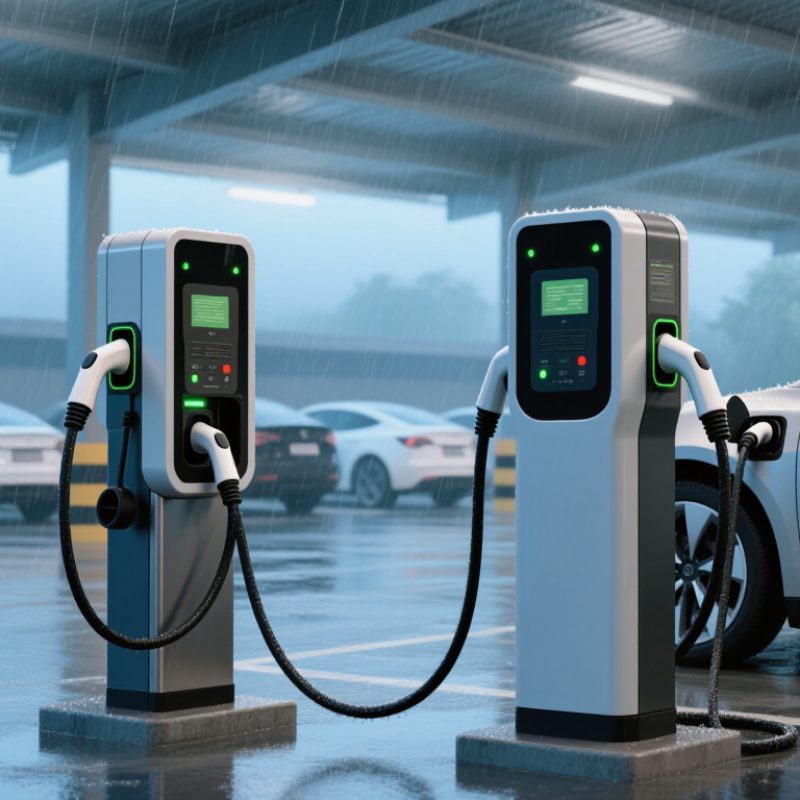
DC Charger Safety Standards: Purpose, Scope, and Key Terminology
DC chargers transfer high voltage directly to an electric vehicle’s battery. Their safety standards address electric shock, overheating, insulation failure, connector design, and communication errors. IEC 61851-1 defines general conductive charging requirements, while IEC 61851-23 focuses on DC charging stations. IEC 61851-24 covers digital communication between the charger and vehicle. These standards are related, but they are not interchangeable.
Key terms deserve careful attention. EVSE means electric vehicle supply equipment, including the charger cabinet, cable, and control system. Isolation monitoring checks whether current leaks toward the vehicle chassis. Residual current protection helps detect dangerous leakage. Thermal management limits heat near power modules and connectors. ISO 15118 supports higher-level vehicle-to-charger communication, while IEC 62196 addresses charging plugs and sockets. The exact requirement may change with voltage, installation location, and local certification rules.
The International Energy Agency reported more than 14 million electric cars were sold globally in 2023. It also recorded over 4 million public charging points by year-end. More equipment means more safety checks in busy sites, garages, and roadside stations. Yet a standard-compliant design can still fail through poor installation or neglected maintenance. That uncomfortable gap matters.
Tips: Ask for the applicable test reports, not only a compliance logo. Check emergency-stop access, cable damage, ventilation, and fault records. Confirm that technicians understand DC isolation testing. A clean screen does not prove a safe cabinet.
Reliable DC charging begins with electrical protection, not charging speed. IEC 61851-23 addresses DC charging system safety, while IEC 60364-7-722 covers installations supplying electric vehicles. Buyers should confirm overcurrent protection, short-circuit interruption, protective earthing, and insulation monitoring. A fault should stop power quickly, before a damaged cable becomes a dangerous heat source.
Residual-current protection also deserves close attention. DC leakage can weaken conventional protection devices, so equipment may require suitable residual-current detection and direct-current fault monitoring. Emergency shutdown controls, connector locking, temperature sensors, and enclosure protection add practical safeguards. The International Energy Agency reported more than four million public charging points worldwide at the end of 2023. More equipment means more varied installation conditions, including wet parking areas and crowded commercial sites.
Paper compliance is not enough. Ask for routine test records, protection-response times, insulation readings, and evidence that safety functions work under realistic load conditions. A charger may pass a factory test yet behave differently beside a long cable run or unstable supply. That gap deserves attention. The Global EV Outlook 2024 also reported strong annual growth in public charging infrastructure, increasing pressure on installers and operators to maintain consistent protection. Buyers should verify local certification requirements and planned maintenance intervals, because international standards do not automatically guarantee suitability for every grid. No checklist is perfect. Experienced inspection still matters.
Top DC Charger Safety Standards Buyers Should Know
Public charging is expanding quickly. The International Energy Agency’s Global EV Outlook 2024 reported over 40% growth in public charging points during 2023. U.S. Department of Energy data recorded more than 180,000 public charging ports in 2024. More equipment means more safety variables. Buyers should verify IEC 61851-23 for DC charging systems and IEC 62196-3 for vehicle connectors. These standards address charging communication, contact design, temperature limits, and mechanical durability. Connector locking matters. A loose coupling can create resistance, heat, and visible discoloration.
Cable selection deserves equal attention. IEC 62893 covers electric vehicle charging cables, including insulation and flexible-cable performance. Look for documented current ratings under realistic ambient temperatures, not only laboratory conditions. Cable jackets should resist oil, abrasion, water, and repeated bending. IEC 60529 ingress ratings help assess protection against dust and water. However, an IP rating does not prove resistance to impact, crushing, or long-term ultraviolet exposure. That distinction is often missed.
Enclosures should meet suitable electrical and impact requirements, including IEC 62262 impact classifications where applicable. Personnel protection requirements, such as those covered by UL 2231, should also be reviewed for the target market. Check leakage protection, grounding, ventilation, and thermal monitoring. Small details matter. A certification report is useful, but installation quality still decides much of the real-world risk. Buyers should request test conditions, cable temperature data, connector cycle results, and evidence of independent assessment. Standards evolve, and older approvals may need a second look.
Essential connector, cable, and enclosure safety standards
The chart compares the maximum DC voltage stated within the scope or rated-voltage designation of key international standards. IEC 61851-1 covers conductive EV charging systems up to 1,500 V DC, IEC 62196-3 covers DC vehicle couplers up to 1,500 V DC, and IEC 62893-4-1 addresses DC charging cables with a rated voltage of 1,000 V DC. IEC 60529 is an enclosure ingress-protection classification standard, so it does not define a DC voltage limit; buyers should verify the required IP rating for the installation environment.
Check IEC 62196-3 for dimensional compatibility, mating interfaces, and DC coupler requirements.
Check IEC 62893-4-1 for DC charging cable construction and rated-voltage requirements.
Use IEC 60529 IP classifications to assess protection against solids and water; the target IP level depends on the site.
When buying a DC charger, testing evidence matters more than a polished product sheet. Ask for reports from an accredited laboratory. The reports should identify the exact model, rated output, test date, and applicable standard edition. Check insulation resistance, grounding continuity, leakage current, overcurrent protection, and emergency shutdown behavior. Thermal testing is also essential. A charger may operate well in a cool workshop but overheat beside a sunlit parking space.
Certification should match the charger’s actual configuration. Verify the certificate holder, model number, power range, and connector arrangement. A certificate for one cabinet does not automatically cover every optional module. Review the certification body’s public records when available. Keep copies of test reports, declarations, installation instructions, and maintenance requirements. These documents support traceability during audits and service work.
Compliance verification continues after delivery. Inspect serial labels, protective enclosures, cable condition, ventilation paths, and firmware records. Commissioning staff should measure voltage, protective conductor continuity, and shutdown response on site. Record the results with dates and technician names. Recheck performance after repairs or major software changes. In practice, paperwork can look complete while a field detail is missed. We have seen loose terminals, blocked vents, and outdated instructions create avoidable risks. A careful buyer should question unclear evidence, even when the equipment appears reliable.
Safe DC charger ownership begins before the unit is powered. Buyers should verify compliance with applicable standards, such as IEC 61851, IEC 62196, or regional electrical requirements. Certification should match the installation site, voltage, connector type, and environmental conditions. A qualified electrician must inspect grounding, overcurrent protection, cable routing, and emergency isolation. Do not place equipment where water, vehicle impact, or blocked ventilation can create extra risk.
Operation requires disciplined habits. Inspect connectors and cables before each shift. Stop charging if you notice heat damage, cracked insulation, unusual noise, or repeated fault messages. Operators should know the emergency-stop location and keep access clear. Chargers also need controlled software updates and accurate fault records. Small mistakes matter. Experienced teams can still miss a loose terminal during a busy installation.
Tips: Keep a simple inspection log. Record temperatures, alarms, connector condition, and service dates. Schedule professional testing at intervals recommended by the manufacturer and local rules. Clean air inlets without spraying liquid into the enclosure. Replace damaged parts through qualified service personnel, not improvised repairs. Maintenance should include insulation checks, protective-device testing, cooling-system inspection, and verification of emergency controls. A practical review after the first month can reveal problems that commissioning did not show. Safety is not a one-time certificate; it is a repeated workplace practice.
Check applicable standards for charging systems, vehicle connectors, cables, enclosures, and personnel protection. Requirements must match voltage, connector type, location, and environmental conditions.
A loose connector can increase electrical resistance and create heat. Discoloration may appear around the contact area. Small clues matter. Inspect the lock before charging.
Confirm current ratings at realistic ambient temperatures, not only laboratory conditions. The cable jacket should resist oil, abrasion, water, and repeated bending. Cable temperature data is worth requesting.
No. An ingress rating mainly describes protection from dust and water. It does not confirm resistance to impact, crushing, or long-term ultraviolet exposure. That difference is easy to miss.
A qualified electrician should inspect grounding, overcurrent protection, cable routing, ventilation, and emergency isolation. Keep equipment away from standing water and vehicle-impact zones. Do not guess.
Stop when you see cracked insulation, heat damage, unusual noise, or repeated fault messages. Also stop if a connector feels unusually hot. Not enough to continue.
Inspect connectors and cables before each shift. Keep the emergency-stop area clear and visible. Record temperatures, alarms, connector condition, and service dates. Keep it visible.
Arrange professional testing according to local requirements and service guidance. Maintenance should include insulation checks, protective-device testing, cooling inspection, and emergency-control verification. Clean air inlets without spraying liquid inside.
No. A report helps, but installation quality still affects risk significantly. Request test conditions, connector cycle results, temperature data, and independent assessment evidence. A certificate is not magic.
Early use can reveal loose terminals, overheating, blocked airflow, or recurring faults. A first-month review may find problems missed during commissioning. Safety needs repetition.
DC charger safety standards define the principles that protect users, vehicles, electrical systems, and surrounding facilities during high-power charging. What safety standards should DC chargers meet? They should address electrical protection, including overvoltage, overcurrent, short-circuit, insulation, grounding, leakage detection, emergency shutdown, and thermal control. Clear terminology and defined scope also help manufacturers, installers, operators, and inspectors apply requirements consistently.
Safety also depends on durable connectors, properly rated cables, secure enclosures, and protection against moisture, dust, impact, and overheating. Chargers should undergo appropriate testing and compliance verification before entering service, with records confirming performance and safety. Correct installation requires suitable power capacity, ventilation, clear access, and reliable protective devices. During operation, users should follow charging instructions, inspect equipment for visible damage, and stop charging if an abnormal condition occurs. Regular maintenance, inspection, software checks, and timely replacement of worn components help preserve safe performance throughout the charger’s service life.

Vernon Charger