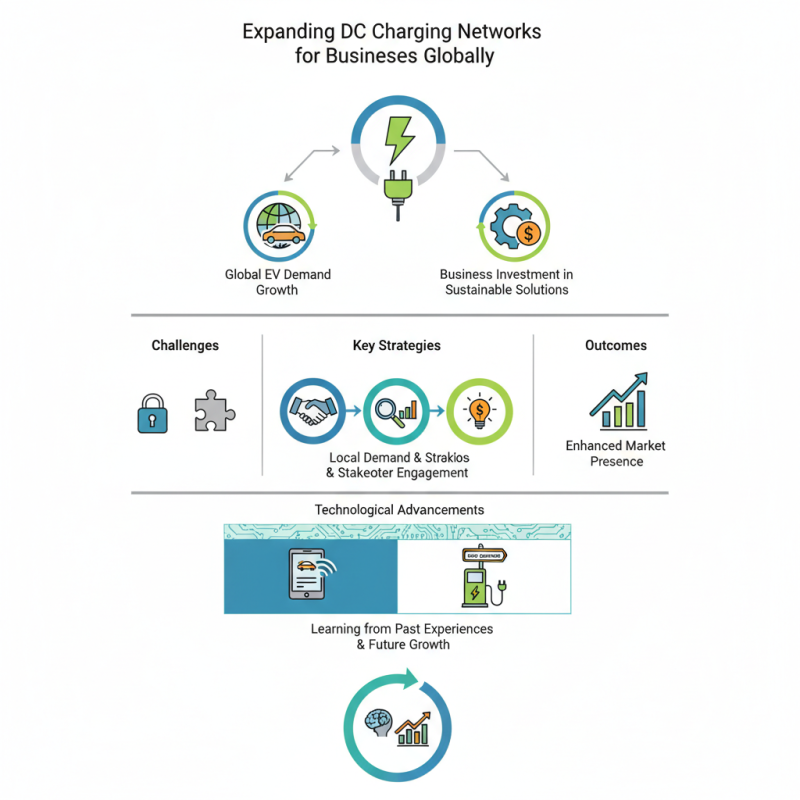
As the demand for electric vehicles grows, businesses must prioritize their charging infrastructure. How to expand DC charging networks for businesses has become a pressing question. Many companies seek to invest in sustainable solutions, yet face challenges in implementation. Expanding charging networks requires careful planning, reliable partnerships, and strategic location choices.
Investing in DC charging stations can enhance a business’s market presence. However, it is not merely about installing chargers. Businesses must assess local demand and engagement from stakeholders. Collaboration with energy providers is essential. Companies should also explore incentives offered by governments. This approach can reduce initial investments and foster community support.
Tech advancements and user experience are crucial. Simply adding more stations may not suffice if they are not well maintained or strategically placed. Infrastructure should include user-friendly interfaces and clear signage. As businesses strive for expansion, it's important to reflect on past successes and failures. Learning from experiences can guide effective decision-making for future growth.
The importance of DC charging networks for businesses cannot be overstated. As organizations transition to electric mobility, access to reliable charging infrastructure becomes essential. According to the International Energy Agency (IEA), the global stock of electric vehicles (EVs) reached 10 million in 2020, and this number is projected to surpass 145 million by 2030. Businesses must adapt to this surge by investing in robust charging solutions.
DC fast chargers have distinct advantages over traditional AC chargers. They can provide up to 80% charge in just 30 minutes, offering speed that enhances customer experiences. A recent study by BloombergNEF indicates that public DC fast charging stations will need to increase by 150% by 2030 to keep pace with EV growth. However, establishing a widespread network poses challenges. Not all regions have the necessary electrical infrastructure or funding.
In addition, businesses must consider the geographical and demographic aspects of their locations. Installing charging stations in underserved areas presents an opportunity but requires careful planning. Companies must evaluate the long-term benefits of investing in charging infrastructure. Ultimately, proceeding without adequate research could lead to underutilized stations, wasting resources. Understanding these dynamics is crucial for effective expansion.
The global demand for Direct Current (DC) charging infrastructure is steadily growing. According to recent reports, the worldwide electric vehicle market could reach over 26 million units sold by 2030. This surge indicates a significant need for robust charging networks. Businesses must assess their regions' infrastructure gaps to capitalize on this trend.
In urban areas, over 60% of electric vehicle users prefer fast charging solutions. Meanwhile, many rural areas lack adequate DC charging facilities, leading to range anxiety among potential EV users. This discrepancy is an opportunity for businesses to invest strategically in locations with high demand. Understanding local energy regulations and grid capabilities is crucial for implementation.
***Tips:***
Focus on areas with existing EV sales growth. Collaborate with local governments to ensure compliance with regulations. Also, consider investing in renewable energy sources to power charging stations sustainably. As businesses expand networks, continuous assessment is vital to adapt to shifting demand patterns. Building too quickly without data can lead to underutilized stations. Regularly survey users to understand their needs better.
Expanding DC charging networks involves leveraging key technologies to enhance accessibility and efficiency. One crucial technology is high-power DC charging. This allows for faster charging times, making electric vehicles more convenient for users. The development of robust charging stations capable of delivering 150 kW to 350 kW can substantially shorten wait times. Regions with well-established networks are often favored by businesses that prioritize customer satisfaction.
Another vital aspect is the integration of smart grid technology. Smart grids can dynamically manage energy distribution based on demand. This reduces strain on local grids and optimizes charging station operations. Advanced software can analyze usage patterns, allowing for better resource allocation. However, businesses must be careful. Dependence on technology can lead to vulnerabilities. Regular maintenance and updates are necessary to prevent potential failures in the system.
Data analytics plays a significant role as well. Utilizing data to identify optimal locations for new charging stations can drive expansion strategies. Insights from charging patterns inform businesses where to invest. Still, over-reliance on data might overlook unique regional needs. Balancing data-driven decisions with on-the-ground feedback is essential for successful expansion. Continuous improvement and adaptation are key to thriving in the ever-evolving landscape of electric mobility.
Creating a robust DC charging network requires strategic partnerships. Local governments play a vital role. Collaborative efforts can lead to streamlined approval processes and grant opportunities. A 2022 report from the International Energy Agency highlights that cities contributing to charging infrastructure saw a 30% increase in electric vehicle adoption.
Businesses must also engage with local enterprises. Working alongside businesses fosters a supportive ecosystem. This can involve sharing resources or co-hosting charging stations. According to a recent industry survey, about 58% of companies reported enhanced brand loyalty by supporting greener initiatives.
However, challenges persist. Balancing cost and accessibility remains crucial. Some regions lack sufficient power grid capacity. Companies must evaluate their long-term investments carefully. Insights from the U.S. Department of Energy suggest a thoughtful approach, considering local demographics and vehicle usage patterns. Effective partnerships will require ongoing dialogues to address these complexities and create sustainable solutions.
| Region | Partnership Type | Key Strategies | Estimated Investment ($) | Projected Charging Stations |
|---|---|---|---|---|
| North America | Local Government | Incentive Programs, Land Use Planning | 2,000,000 | 500 |
| Europe | Private Sector | Joint Ventures, Shared Funding | 3,500,000 | 700 |
| Asia-Pacific | Public-Private Partnership | Infrastructure Development, Tax Incentives | 4,000,000 | 1,200 |
| South America | Government Grants | Grant Applications, Pilot Projects | 1,500,000 | 300 |
| Africa | Community Initiatives | Local Engagement, Awareness Campaigns | 750,000 | 150 |
Expanding DC charging networks globally requires effective financial models. Businesses must carefully evaluate implementation costs and potential revenue streams. Factors include equipment investment, installation expenses, and ongoing maintenance. A detailed financial analysis can help determine the return on investment.
One approach is to explore partnerships. Collaborating with local governments can reduce costs and enhance reach. Companies can benefit from shared resources. However, navigating different regulatory environments can be challenging. Businesses should ensure compliance with local laws and practices.
Tip: Focus on scalable solutions. Start small and expand as demand grows. Monitor charging station usage to identify trends. This data can guide future investments.
Also, consider diverse funding sources. Grants, loans, and investor funding are crucial. A mix of financial support can reduce reliance on any single option. Yet, securing funding requires a solid business case, which may take time to develop.
Tip: Engage stakeholders early in the process. Their feedback can refine your strategy. Building relationships can foster support that eases implementation.
: They streamline approval processes and create grant opportunities, enhancing infrastructure.
Businesses can share resources and co-host charging stations to build a supportive ecosystem.
Businesses need to evaluate equipment costs, installation, and ongoing maintenance expenses.
Focus on scalable solutions. Start small and expand as demand grows.
Analyzing vehicle usage patterns helps ensure investments meet community needs effectively.
Navigating varying regulatory environments and ensuring compliance can be complex.
Diverse options like grants, loans, and investor funding can provide financial stability.
Early feedback can refine your strategy and build supportive relationships for smoother implementation.
It increases financial risk, as difficulties in that area can halt progress.
It identifies trends, guiding future investments and improving overall strategy.
The article "How to Expand DC Charging Networks for Businesses Globally?" emphasizes the critical role of DC charging networks in supporting the transition to electric mobility. It outlines the growing global demand for robust charging infrastructure as businesses seek to accommodate electric vehicle usage. Key technologies, such as fast-charging solutions and grid integration, play a vital role in the expansion of these networks.
Moreover, the article discusses effective strategies for partnering with local governments and businesses, promoting collaboration to enhance infrastructure development. Financial models for implementing DC charging solutions are also explored, providing a roadmap for businesses to invest sustainably. Overall, understanding "how to expand DC charging networks for businesses" is essential for meeting the needs of the electric vehicle market and supporting sustainable growth across various regions.

Vernon Charger