In the rapidly evolving electric vehicle (EV) industry, understanding the infrastructure is crucial. A key question arises: "What is the difference between wall-mounted and ground-mounted DC chargers?" These chargers are essential for fast EV charging. According to a recent report from the International Energy Agency, global public charging infrastructure has doubled in just two years, highlighting the growing demand for versatile charging solutions.
Expert Charles Anderson, a prominent figure in charging technology, emphasizes, "Choosing the right mounting type can influence user experience and charging efficiency." Wall-mounted chargers are ideal for space-saving in urban settings, while ground-mounted versions often offer higher power outputs for quicker charging.
Both options present unique advantages, yet neither is flawless. Ground-mounted chargers require more space, which can be a limitation in congested areas. Conversely, wall-mounted chargers might restrict the placement of larger EV models. Knowing these differences can aid businesses and consumers in making informed decisions as the market continues to expand.
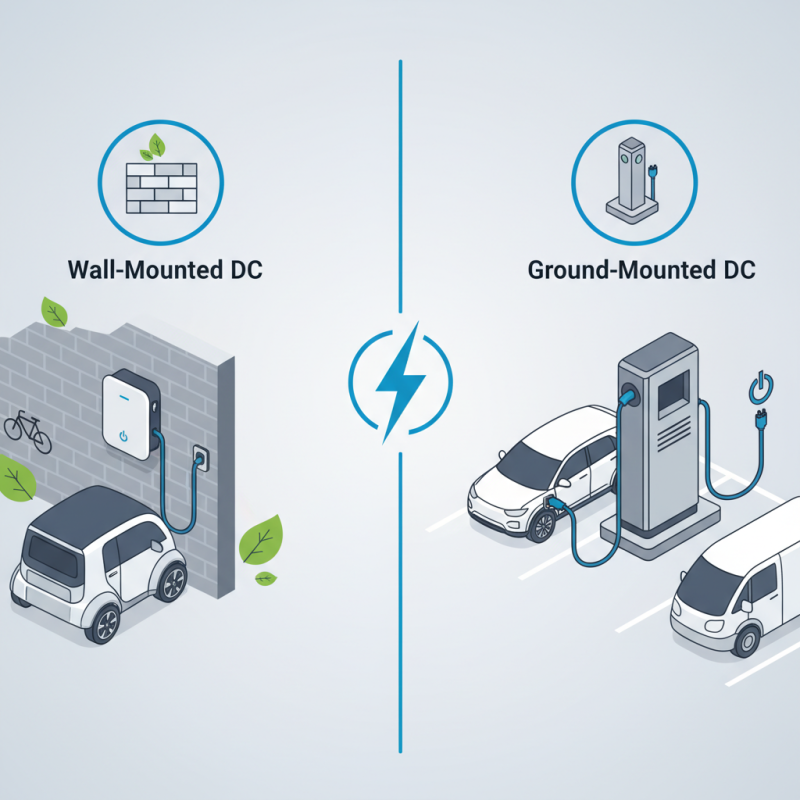
DC chargers play a vital role in electric vehicle infrastructure. They provide rapid charging options, essential for modern EVs. These chargers convert direct current (DC) electricity directly to the vehicle’s battery. Expanding the DC charger network is crucial for the EV market.
When considering DC chargers, one must decide between wall-mounted and ground-mounted options. Wall-mounted chargers are space-saving and ideal for residential areas. They can blend into the architecture. Ground-mounted chargers require more space but might suit public charging stations better. This choice may depend on location and accessibility.
**Tips:** If space is limited, wall-mounted chargers are better. Ensure proper installation to avoid potential hazards. Evaluate the charging speed and compatibility with your vehicle. Regular maintenance can enhance performance and longevity.
Wall mounted DC chargers offer unique benefits for electric vehicle (EV) owners. They save space and can be installed in various locations, such as garages or parking lots. These chargers are often more visually appealing and can blend in with existing structures. Users can easily plug in their vehicles without the hassle of searching for ground-mounted stations.
In terms of installation, wall mounted chargers are generally easier and quicker to set up. They require fewer modifications to the site and take advantage of vertical space. Additionally, many wall mounted models come with smart features, allowing users to monitor charging via mobile apps. However, some might find the charging speed to be slower compared to ground-mounted options.
While most find wall mounted chargers convenient, it’s essential to assess your specific needs. Not all locations may be suitable for wall mounting. If the wall isn't sturdy enough, it may lead to safety concerns over time. Overall, understanding these details helps users make informed decisions.
Ground mounted DC chargers offer unique advantages over their wall-mounted counterparts. They are often installed in public charging stations, parking lots, or along highways. These chargers provide easy access for various types of electric vehicles. Local infrastructure plays a significant role in where these chargers are placed. It’s essential to consider the geographical and urban landscape when designing these installations.
One key benefit of ground-mounted chargers is their visibility. Drivers can easily spot them, which encourages more people to adopt electric vehicles. However, weather exposure can be an issue. Dust, rain, and snow can affect their efficiency over time. Regular maintenance is crucial to ensure their functionality. Understanding the impact of environmental factors is necessary for reliable charging solutions in diverse locations.
In some scenarios, ground-mounted chargers may lack proximity to power sources. This sometimes results in higher installation costs. Engaging with local authorities and utility companies can help mitigate these challenges. Assessing these installations requires careful planning and evaluation. It is essential for operators to reflect on these aspects to enhance the overall charging experience for users.
When choosing between wall-mounted and ground-mounted DC chargers, the installation and space requirements are crucial factors. Wall-mounted chargers save space, making them ideal for smaller areas. They typically require access to a wall near parking zones, ensuring easy installation. Ground-mounted chargers, on the other hand, need designated space on the ground, which can lead to higher installation costs due to paving and grounding requirements.
For those with limited space, wall-mounted options are a more practical choice. They often allow for flexibility in location. However, it’s essential to consider the weight and dimensions of equipment. Proper wall reinforcement may be necessary for heavier chargers. Ground-mounted options can handle more robust setups, offering stability and often more powerful charging capabilities.
Tips: Always check local regulations regarding installations. Consider potential weather impacts on installation. Ensure you have adequate space, not just for the charger but also for vehicles maneuvering around the installation site.
When considering the cost of wall-mounted versus ground-mounted DC chargers, various factors come into play. Wall-mounted chargers generally have lower installation costs. They require fewer materials and less groundwork. However, they may need electrical upgrades to support their installation. Ground-mounted chargers often involve significant upfront expenses due to the need for concrete bases and more extensive electrical work.
Maintenance can also differ based on the type of mount. Wall-mounted models are typically easier to access for repairs, reducing downtime. Ground-mounted chargers, while more robust, can be subject to wear from environmental factors. This often leads to higher long-term costs associated with repairs.
Another cost factor is space. Wall-mounted chargers save ground space, making them a better option for urban settings. Ground-mounted chargers might be ideal for larger properties, but they occupy essential land. Choosing the right charger type involves balancing these costs with specific needs and locations. The decision may not be straightforward, highlighting the importance of careful evaluation of site conditions and usage patterns.
: Wall mounted DC chargers save space and can be installed in various locations like garages. They are also visually appealing.
Yes, wall mounted chargers are generally quicker to install and require fewer site modifications.
Some users may find the charging speed slower than ground-mounted options. Not all walls may be suitable for mounting.
Ground mounted chargers are often located in public charging stations, parking lots, or along highways for easy access.
They can be affected by weather, which might reduce their efficiency over time. Regular maintenance is crucial.
Wall mounted chargers generally have lower installation costs, but may require electrical upgrades compared to ground-mounted options.
Ground-mounted chargers can incur higher long-term costs due to wear from environmental factors, making maintenance essential.
Wall mounted chargers save ground space, making them ideal for urban areas, while ground mounted chargers occupy more land.
Yes, wall mounted models are typically easier to access, which can reduce downtime during repairs.
Users need to evaluate costs, space availability, and installation conditions to make the best choice for their needs.
In examining the question, "What is the difference between wall-mounted and ground-mounted DC chargers," this article delves into the functionalities and applications of both types of chargers. Wall-mounted DC chargers are typically more space-efficient, making them suitable for residential garages and urban environments where floor space is limited. They often require less installation infrastructure and can serve as an aesthetic addition to the premises. In contrast, ground-mounted DC chargers are better suited for locations with ample space, such as commercial parking lots, where they can accommodate multiple charging stations and larger vehicles.
The comparative analysis also highlights the installation and space requirements, emphasizing that wall-mounted chargers are easier and cheaper to install, while ground-mounted chargers may incur higher costs due to excavation and foundation work. Ultimately, the choice between these two types hinges on specific needs, including space availability, installation costs, and intended usage, allowing users to make informed decisions based on their charging requirements.

Vernon Charger