China’s DC charging market offers powerful, affordable solutions for modern electric vehicles. However, charging speed alone does not define a charger’s quality. A reliable unit should regulate voltage, current, heat, and communication with the vehicle’s battery management system. These controls can reduce unnecessary stress during repeated fast-charging sessions.
The central question is: How DC chargers impact EV battery life depends on several conditions. Battery temperature, charging frequency, charging power, and state of charge all matter. A 120 kW charger may be suitable for one vehicle but excessive for another. During a practical session, the battery may accept high power at 25% charge, then reduce power near 80%. That tapering protects the cells and limits heat buildup.
Heat matters greatly.
The best China-made DC chargers should provide stable output, accurate monitoring, strong cooling, and compatible communication protocols. Buyers should examine test records, warranty terms, efficiency data, and compliance with applicable GB/T or international requirements. A charger with impressive peak power may still perform poorly if its cooling system is weak. That distinction is easy to miss.
The evidence is not perfectly simple. Battery aging also depends on driving habits, climate, storage conditions, and the vehicle’s own software. Therefore, claims that one charger will always extend or shorten battery life deserve careful review. Professional evaluation should combine manufacturer specifications, independent testing, and real charging data. Used thoughtfully, high-quality DC charging can support convenient travel without automatically causing serious battery damage. Consistent maintenance remains essential.
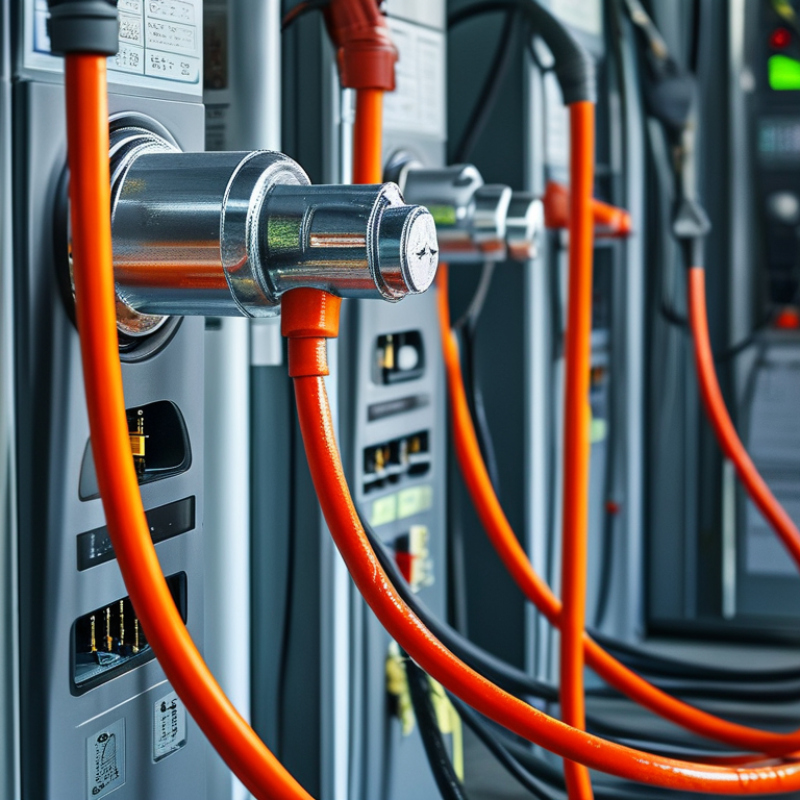
China’s Best DC Chargers: 60–350 kW Power and Battery Stress
China’s best DC chargers now commonly deliver 60–350 kW, but higher power does not automatically damage an EV battery. The vehicle decides how much energy the pack can accept. Charging speed changes with battery temperature, state of charge, and pack design. A 350 kW charger may provide only 80 kW to a cold or nearly full battery.
Battery stress mainly comes from heat and sustained high current. Frequent fast charging can increase cell aging, especially above 80% charge. Modern battery management systems reduce power when temperatures rise. Liquid cooling also helps maintain safer operating conditions. Still, protection systems cannot remove every aging effect. Real-world driving, climate, and charging habits create different results.
Tips: Use high-power charging when travel requires it, not as a daily habit. Keep the battery between 20% and 80% for routine use. Precondition the pack before charging in very cold or hot weather. After a long highway drive, allow a short cooling period when practical. Check charging data, not only the advertised power. A session averaging 120 kW may be gentler than a brief 250 kW peak. Independent testing and service records are useful, although they rarely predict every driver’s experience. I would not treat one charging session as proof of battery damage. That conclusion needs time, temperature records, and capacity measurements.
China’s Best DC Chargers: 60–350 kW Power and Battery Stress
Ideal 10–80% charging time for a 75 kWh EV battery at different DC charging power levels. Higher power reduces charging time but can increase heat-management and battery-stress demands, especially when the battery is cold, hot, or near a high state of charge.
Calculation basis: 10–80% charging requires 52.5 kWh for a 75 kWh battery. The figures show ideal charging time using battery energy divided by charger power; real-world charging is usually longer because of charging losses, battery temperature, vehicle limits, and power tapering above approximately 80% state of charge. Higher charging power does not automatically mean faster degradation because battery cooling, cell chemistry, charging controls, and usage frequency are also important.
How 400–800 V Charging Systems Control Heat and Charging Speed
A 400–800 V charging system changes how an EV manages heat and charging speed. For the same 200 kW output, an 800 V pack draws about half the current of a 400 V pack. Because cable losses follow I²R, resistive heat can fall to roughly one-quarter, assuming similar resistance. Lower heat gives the battery management system more room to maintain high charging power.
Industry data supports careful thermal control. The International Energy Agency’s Global EV Outlook 2024 reported more than four million public charging points worldwide by the end of 2023. Meanwhile, U.S. Department of Energy technical studies identify extreme-fast charging as a major battery-aging challenge, especially when cells remain hot for long periods. Liquid cooling, temperature sensors, and controlled current tapering help protect the pack near high state-of-charge levels.
Voltage alone does not guarantee longer battery life. Cell chemistry, cooling design, charging frequency, and software calibration also matter. A well-designed 400 V system may outperform a poorly managed 800 V system. That detail is often overlooked. In daily use, charging from 10% to 70% usually creates less stress than repeatedly pushing fast charging above 80%. The practical lesson is imperfect but useful: faster charging should be matched with stronger thermal monitoring, not treated as a free upgrade.
Battery Aging Metrics: Capacity Loss, Resistance Growth, and C-Rate
DC fast charging is often blamed for EV battery aging, but the real story is more measurable. Capacity loss reduces driving range, while resistance growth makes the battery heat faster under load. A 2020 analysis of more than 6,000 electric vehicles reported average capacity degradation near 2.3% per year, although usage patterns created large differences.
C-rate matters. It describes charging power relative to battery capacity. A 100 kW charger can create a higher C-rate in a small battery than in a larger pack. Higher C-rates increase heat and lithium-plating risk, especially below freezing or near full charge. The U.S. Department of Energy’s battery research reports repeatedly identify temperature, charging rate, and high state of charge as major aging factors. Fast charging is only one part.
Resistance growth is less visible than range loss. Drivers may notice slower acceleration, stronger cooling noise, or reduced charging speed before a clear capacity drop appears. Testing data from the International Council on Clean Transportation also shows that real-world battery performance varies with climate and charging behavior. The evidence is useful, but not perfect. Public reports often combine different cell designs and driving conditions. A charger’s maximum output alone cannot predict battery life. Daily charging habits still deserve closer attention.
Why 20–80% State of Charge Helps Reduce DC Fast-Charging Wear
China Best DC Chargers: How Do They Affect EV Battery Life?
DC fast charging can shorten charging time dramatically, but repeated high-power sessions may increase battery stress. Heat matters. Charging near a very low or very high state of charge can also raise electrical and thermal demands. The 20–80% range usually offers a more balanced operating window. It helps the battery accept energy efficiently, while reducing the time spent at high voltage and temperature. However, battery chemistry, cooling design, charging speed, and outdoor temperature all influence the result.
Tips: Use DC fast charging mainly for long trips or urgent charging. When practical, stop near 80% instead of waiting for a full charge. Allow the battery to warm or cool before charging in extreme weather. Check the vehicle’s charging guidance, because the safest range can differ by model. Keep an eye on charging speed. A sharp slowdown near 80% is normal.
The 20–80% rule is useful, not absolute. A full charge before travel will not instantly damage the battery. The bigger concern is making high-power charging your daily habit, especially in hot conditions. Battery management systems protect modern vehicles, yet protection cannot remove every aging effect. I once viewed charging limits as simple numbers; real usage is less tidy. Drivers should watch long-term range, charging behavior, and temperature patterns instead of following one rigid formula. Small habits help. Temperature still matters most.
GB/T 20234 Chargers: Balancing Charging Power, Temperature, and Battery Life
GB/T 20234 DC charging balances power, temperature, and battery life through coordinated control. The standard defines charging interfaces and communication requirements, not one fixed charging speed. Actual output depends on the vehicle, charger, battery state, and thermal system. IEA’s Global EV Outlook 2024 reports that public fast-charging capacity grew by about 55% in 2023. Higher availability is useful, but repeated high-power sessions can increase heat and lithium-plating risk, especially above 80% state of charge.
Temperature matters more than the headline kilowatt number. Battery management systems usually reduce current when cell temperatures rise or charging approaches full capacity. The U.S. Department of Energy’s Vehicle Technologies Office identifies thermal control as a major factor in lithium-ion durability. Field service data also shows that moderate charging, stable cooling, and avoiding frequent deep discharges support longer battery performance. Keep it practical. A 60–80% daily charge window often reduces stress, while preconditioning in cold weather helps the pack accept energy safely.
One detail deserves caution. Faster charging does not automatically destroy a battery. Battery chemistry, cooling design, driving conditions, and software calibration all matter. Argonne National Laboratory’s battery modeling work likewise treats aging as a combined result of temperature, time, and cycling, rather than charging power alone. GB/T 20234 equipment can therefore support battery-friendly operation when communication is accurate and thermal limits are respected. My own assessment is less tidy: occasional rapid charging is usually reasonable, but frequent charging in extreme heat still deserves closer monitoring.
China Best DC Chargers: How Do They Affect EV Battery Life?
GB/T 20234 Chargers: Balancing Charging Power, Temperature, and Battery Life
| Typical DC Output |
Typical Voltage / Current |
Approximate Charging Time
10–80% SOC |
Typical Battery Temperature Trend |
Expected Battery-Life Impact |
Recommended Operating Practice |
| 20–30 kW |
About 300–750 V
Approximately 40–100 A |
90–180 minutes |
Low to moderate heat generation; usually easier to manage in mild ambient conditions. |
Low stress when charging is performed within the battery manufacturer's limits. |
Suitable for routine charging when time is available. Avoid charging a very cold or overheated battery. |
| 50–60 kW |
About 300–750 V
Approximately 70–200 A |
45–90 minutes |
Moderate temperature rise; active cooling may operate more frequently. |
Generally moderate, provided thermal control and current limits function correctly. |
A practical balance between charging speed and thermal load for regular public charging. |
| 90–120 kW |
About 400–750 V
Approximately 120–300 A |
25–55 minutes |
Noticeable heat during the constant-current phase; cooling demand is higher. |
Moderate stress if used frequently at high SOC or in hot weather. |
Prefer a 10–70% or 10–80% SOC window and allow battery preconditioning when available. |
| 150–180 kW |
About 400–800 V
Approximately 190–450 A |
18–40 minutes |
High thermal load; battery-management and cooling systems must regulate current continuously. |
Higher ageing risk when repeated under unfavorable temperature or SOC conditions. |
Use mainly for time-critical journeys. Stop near the vehicle's recommended upper fast-charge limit. |
| 200–240 kW |
About 500–800 V
Approximately 250–500 A |
12–30 minutes |
Very high potential heat generation; power may taper rapidly as temperature or SOC increases. |
Highest potential stress, especially with repeated sessions above 80% SOC. |
Confirm that the vehicle supports the requested power. Keep charging sessions short and avoid repeated hot-soak charging. |
Key considerations:
Actual charging power is determined by the vehicle, battery-management system, state of charge, battery temperature, charger capacity, and the GB/T charging connection. Charging power normally tapers as the battery approaches a high state of charge. The time ranges are illustrative estimates for a compatible passenger EV with a battery capacity of approximately 60–80 kWh; actual results vary by vehicle and conditions.
Conclusion
How DC chargers impact EV battery life depends on charging power, voltage, temperature, and battery management. Modern DC chargers ranging from 60 to 350 kW can significantly shorten charging time, but higher power may generate more heat and place greater stress on battery cells. Charging systems using 400–800 V architectures help control current, improve energy efficiency, and manage thermal conditions, allowing faster charging with less unnecessary heat when properly matched to the vehicle.
Battery aging is commonly evaluated through capacity loss and resistance growth, both of which can be influenced by frequent high C-rate charging. Using a moderate charging routine, especially between 20% and 80% state of charge, can reduce stress and support longer battery life. GB/T 20234 charging equipment can balance power delivery, temperature control, and charging speed through coordinated communication with the vehicle, helping drivers achieve convenient fast charging while limiting avoidable battery wear.

 Vernon Charger