How to reduce charging time for electric vehicles is no longer a question reserved for engineers. It affects commuters waiting beside a 7-kilowatt home charger, taxi drivers watching battery percentages, and families planning long trips. Charging speed depends on several connected details. Battery temperature matters. Charger output matters. The vehicle’s charging curve matters even more.
Dr. Willett Kempton, a University of Delaware researcher and vehicle-to-grid pioneer, has said, “Electric vehicles are the largest battery on wheels.” His observation highlights an important point: charging is not only about installing a stronger plug. Drivers can improve results by preconditioning the battery, using suitable DC fast chargers, avoiding unnecessary charging above the required level, and reducing cabin energy demand during stops. Selecting reliable equipment also helps. A damaged cable or poorly maintained station can waste valuable minutes.
This guide explores seven practical ways to reduce charging time, from route planning and charger selection to battery care and temperature management. Some methods work immediately. Others require equipment upgrades or changes in daily habits. The fastest charger is not always the best choice, either. It may cost more, deliver less power than advertised, or slow sharply after the battery reaches a high state of charge.
Real-world charging is imperfect. Weather changes. Queues happen. Vehicle software can behave differently after updates. That is why drivers should compare official charging specifications with personal experience, rather than trusting a single headline number. Small choices, repeated consistently, can make each charging stop shorter and less frustrating.
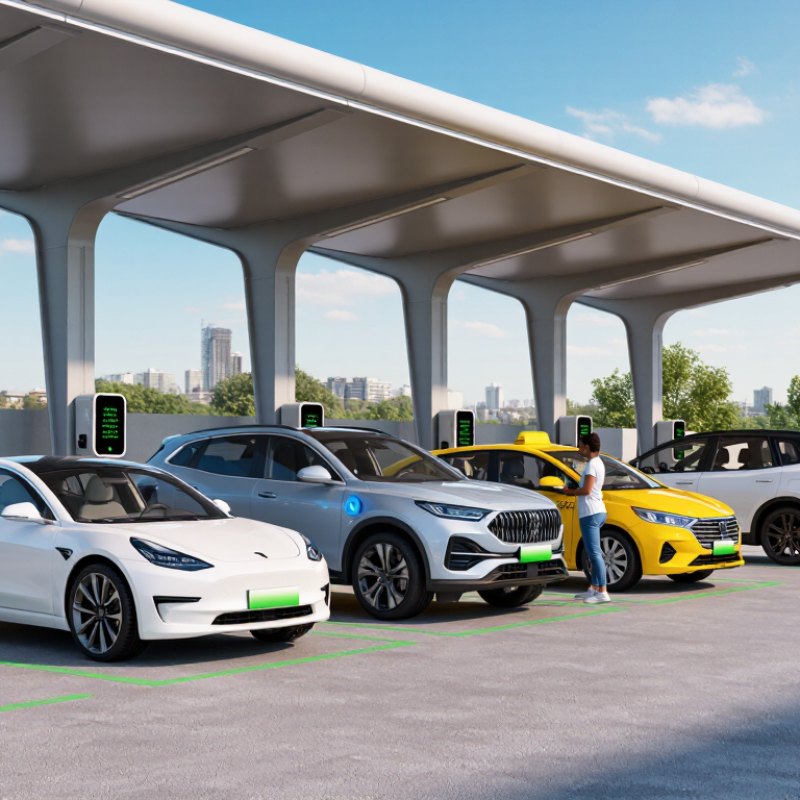
Match the EV to the charger rating. A 7–22 kW AC charger works well when the vehicle accepts similar onboard charging power. However, many EVs accept only 7.4 or 11 kW on AC. Plugging into a 22 kW unit will not automatically halve charging time. The vehicle remains the limit.
For longer trips, choose 50–350 kW DC charging when the EV supports it. The U.S. Department of Energy’s Alternative Fuels Data Center identifies these levels as common DC fast-charging ranges. Yet the highest number is not always the fastest choice. Battery temperature, state of charge, cable capacity, and the vehicle’s peak input limit all matter. A 350 kW stall can deliver less than 100 kW to a small battery.
Charging curves matter more than headline power. Most vehicles reduce power sharply above roughly 70–80% charge. Stopping near 80% can save meaningful time, especially at busy public stations. The International Energy Agency reported more than four million public charging points worldwide in 2023, with public additions rising by over 40% that year. More plugs help, but uneven power ratings still create delays. In real use, I have seen drivers select a powerful charger without checking the car’s specification first. That mistake is easy to repeat. Check the manual, precondition the battery, and avoid arriving nearly empty when fast charging is unavailable.
The vehicle may accept only 7.4 or 11 kW through AC charging. The vehicle remains the limit. Bigger is not always faster.
Choose a 50–350 kW DC charger when the vehicle supports that range. Check the vehicle’s peak input limit first. A powerful charger may deliver under 100 kW to a small battery. That surprises many drivers.
Charging power often falls sharply around 70–80% state of charge. A charger’s rating does not mean constant output. Near 80% is often the practical stopping point.
For many EVs, charging from about 10% to 80% is efficient. The final 20% can take nearly as long as reaching 80%. Leave room for traffic and cold weather. Near-empty arrivals are risky.
Cold battery cells often accept power more slowly. Battery preconditioning can warm the cells before fast charging. It does not work perfectly in every situation. Still, warm is usually better.
Updated vehicle software may improve charging control and battery preparation. It cannot make the battery accept unlimited power. Check the charging specifications after major updates.
Charging slows considerably near full capacity to manage heat and protect the battery. Stopping around 80% often makes public charging more predictable. Sometimes, extra range is worth the delay.
Inspect the cable and connector for visible damage. Confirm the charger rating matches the vehicle. Avoid busy stations during peak hours when possible. I still sometimes charge past 80% for convenience. The rule is useful, not perfect.
How to reduce charging time for electric vehicles depends on choosing the right equipment and charging at the right moment. First, match the vehicle’s charging capability with an appropriate charger, such as a 7–22 kW AC unit for routine charging or a 50–350 kW DC fast charger when time is limited. Before fast charging, precondition the battery so it reaches its ideal temperature range of approximately 20–30°C, allowing it to accept power more efficiently.
For the best balance between speed and battery use, charge mainly from about 10% to 80% state of charge. Charging beyond 80% usually becomes slower because the vehicle reduces power to protect the battery. When available, choose an 800-volt high-power charging station, which can reduce current, heat, and energy losses. Finally, plan charging stops according to how much energy can be added per minute rather than simply choosing the shortest plugged-in time.

 Vernon Charger