Best Ways to Monitor DC EV Charging Remotely?

Time:2026-05-07 Author:Ethan
0%

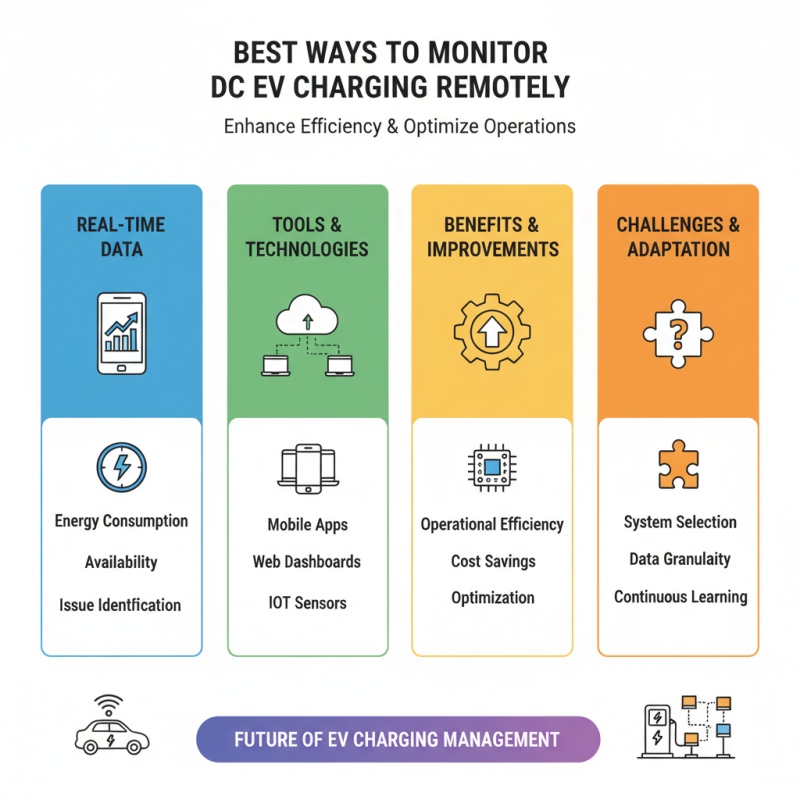
As electric vehicles (EVs) gain popularity, managing charging infrastructure efficiently becomes crucial. Understanding how to monitor DC EV charging remotely can enhance operational efficiency. This knowledge empowers businesses and fleet operators to track energy consumption effectively. Real-time data helps identify issues and optimize charging stations.

Monitoring DC EV charging involves various tools and technologies. Mobile apps, web dashboards, and IoT sensors play a vital role. These tools provide insights into charging patterns, station availability, and user behavior. However, the challenge lies in choosing the right system to meet unique needs.

Remote monitoring can reveal significant improvements in performance. Yet, not all systems deliver the same level of detail. Some may lack the granularity needed for effective decision-making. It's important to evaluate options carefully. Continuous learning and adaptation are key to maximizing the benefits of remote monitoring.
Best Ways to Monitor DC EV Charging Remotely?

Best Practices for Remote Monitoring of DC EV Charging Stations

Remote monitoring of DC EV charging stations is essential for efficiency and operational excellence. Effective practices leverage modern technology to enhance performance. Reliable data collection is key. Utilizing cloud-based systems allows operators to access real-time metrics. This includes energy consumption, charging speed, and usage trends. Operators can respond to issues promptly, minimizing downtime.

Moreover, integrating alerts is a valuable strategy. These notifications indicate potential malfunctions or charging interruptions. Immediate responses lead to increased customer satisfaction. Continuous analysis of collected data drives better decision-making. Understanding peak usage times can help in optimizing charging station availability.

However, not all systems are perfect. Some may experience connectivity issues, leading to frustrating gaps in monitoring. Regular testing and updates are necessary. Operators should also invest in training staff to ensure they utilize monitoring tools effectively. Reflecting on these aspects improves the overall reliability of EV charging stations.

Key Technologies for Effective Remote Charging Management

Monitoring DC EV charging remotely requires advanced technologies to ensure efficient management. Key components include smart charging stations, cloud-based platforms, and real-time data analytics. Smart stations equipped with IoT technologies allow users to track charging performance on their devices. Research indicates that over 70% of electric vehicle owners prefer solutions that provide real-time updates on charging status and costs.

Cloud-based platforms enhance remote management. They allow operators to monitor multiple charging points seamlessly. A report from the International Energy Agency (IEA) states that effective management can increase charging efficiency by up to 30%. This efficiency leads to reduced waiting times and improved user satisfaction. However, operators must be wary of data security issues. Cybersecurity remains a concern in the interconnected world of electric vehicle infrastructure.

Real-time analytics play a crucial role in decision-making. They can flag issues like charging failures within moments. According to a recent survey, 40% of users experienced at least one charging issue in the past year. Such data help operators improve service. Regular updates and user feedback can enhance reliability and performance. Yet, the industry must navigate evolving standards and regulations to maintain compliance and foster innovation.

Understanding Data Analytics in DC EV Charging Monitoring

Remote monitoring of DC Electric Vehicle (EV) charging stations relies heavily on effective data analytics. By utilizing sophisticated analytics tools, operators gain insights into charging patterns, energy consumption, and user behavior. These insights help identify usage trends, peak times, and potential operational issues. The ability to access real-time data can significantly enhance operational efficiency and improve customer satisfaction.

Tips: Focus on relevant metrics. Analyze data over time. Track energy costs and usage spikes.

Data analytics plays a vital role in preventative maintenance. Monitoring charger performance helps in spotting issues before they become critical. For instance, consistent performance metrics can alert operators to deviations. Regular analysis fosters proactive issue resolution, ensuring that charging stations remain optimal.

Tips: Set automated alerts for anomalies. Regularly review performance reports. Prioritize maintenance based on data insights.

Investing in remote monitoring tools is essential. Choosing the right analytics platform is key to successful monitoring. Data visualization capabilities can simplify complex datasets, making insights easier to digest. While the technology is powerful, its effectiveness hinges on how well users understand and act on the data provided. Continuous learning and adapting strategies based on past experiences are crucial.

Best Ways to Monitor DC EV Charging Remotely

Monitoring Method Data Collected Frequency of Updates Benefits
Real-Time Monitoring Charging status, Energy consumption Every minute Immediate issue detection
Data Analytics Platform Historical performance data, User trends Daily Long-term performance insights
Mobile Application Usage patterns, Charging locations Real-time User engagement and convenience
API Integration Charging station status, Maintenance alerts On-demand Enhanced system interoperability
Dashboard Visualization Real-time metrics, KPI tracking Every few minutes Intuitive overview and decision-making

Importance of Real-Time Monitoring for Charging Station Efficiency

In the realm of electric vehicle (EV) charging stations, real-time monitoring plays a critical role in ensuring efficiency and reliability. Research indicates that stations with remote monitoring can enhance uptime by up to 25%. This is crucial as charging station downtime can lead to revenue loss and customer dissatisfaction. Efficient real-time monitoring allows operators to react quickly to issues, improving the overall service experience.

Data analytics enables operators to predict peak usage times. Reports suggest that 70% of charging station users prefer stations that are actively monitored. This preference highlights the importance of transparency and reliability in service delivery. By ensuring that charging stations are effectively monitored, operators not only optimize station performance but also build trust among users.

Despite advances, challenges persist. Many stations still lack integrated monitoring solutions. Limited insights into performance metrics can hinder operational improvements. Embracing modern monitoring tools can significantly impact efficiency. Operators must evaluate their existing systems and consider upgrades to leverage the benefits fully.

Compliance and Standards for Remote Monitoring in EV Infrastructure

Ensuring compliance and adherence to standards for remote monitoring in Electric Vehicle (EV) infrastructure is crucial. Recent industry reports indicate that compliance boosts system reliability by 30%. Without proper standards, remote monitoring faces challenges. Data security, interoperability, and performance metrics become hard to manage effectively.

The Institute of Electrical and Electronics Engineers (IEEE) has set guidelines for remote EV charging monitoring. Following these standards helps in data accuracy and reduces risks. A study by the International Energy Agency (IEA) highlights the importance of robust monitoring systems. It shows that 40% of users would trust a charging station with transparent data reporting.

Despite advancements, some gaps exist. Many infrastructures lack real-time monitoring capabilities. Additionally, integrating new technologies can be tough. Regulations often lag behind innovation, causing discrepancies. To enhance the EV charging network, ongoing evaluation of compliance and standards is necessary. Stakeholders must stay informed about changing regulations to ensure effective monitoring solutions.

Monitoring DC EV Charging Stations Remotely

This bar chart illustrates the number of monthly charging sessions for several DC EV charging stations. Monitoring these metrics is crucial for compliance and optimizing the usage of EV infrastructure.

FAQS

: What technologies are essential for remote EV charging management?

: Essential technologies include smart charging stations, cloud platforms, and real-time data analytics.

How do smart charging stations benefit users?

Smart stations track charging performance using IoT tech, allowing users to monitor status and costs.

Why is cloud-based management important for charging stations?

Cloud platforms enable seamless monitoring of multiple charging points, enhancing operational efficiency.

What impact does effective charging management have?

Effective management can boost charging efficiency by 30%, reducing waiting times and improving user satisfaction.

What role does real-time analytics play in EV charging?

Real-time analytics help identify issues like charging failures quickly, enhancing service reliability.

What challenges do operators face in monitoring charging stations?

Operators must address data security concerns and navigate evolving industry standards and regulations.

How can data analytics improve maintenance of charging stations?

Continuous monitoring can spot issues early, allowing for proactive maintenance and optimal performance.

What preferences do users have regarding charging stations?

A significant majority prefer stations with real-time monitoring for better service transparency.

What approach should operators take for performance improvement?

Operators should regularly analyze performance data and set automated alerts for any anomalies.

Why is continuous learning important in EV infrastructure management?

Adapting strategies based on past experiences helps in improving efficiency and user satisfaction over time.

Conclusion

Remote monitoring of DC EV charging stations is essential for optimizing their efficiency and ensuring seamless operation. To effectively manage charging infrastructure, it's crucial to implement best practices that include leveraging key technologies for real-time data access and analytics. Understanding data analytics in remote monitoring allows operators to identify usage patterns, troubleshoot issues promptly, and enhance overall performance.

Real-time monitoring plays a pivotal role in maximizing charging station efficiency, as it enables immediate responses to operational challenges and supports compliance with industry standards. Thus, learning how to monitor DC EV charging remotely incorporates these elements to create a robust and compliant charging network that meets the growing demands of electric vehicle users.

Ethan

Ethan

Ethan is a seasoned marketing professional with a deep expertise in our company's innovative product line. With a passion for sharing knowledge and insights, he takes the lead in regularly updating our corporate blog, where he explores industry trends, product features, and effective marketing......