Expanding a DC charging network in 2026 requires more than installing additional chargers. It demands practical planning, dependable equipment, and a clear understanding of driver behavior. Businesses must examine parking patterns, fleet schedules, electrical capacity, and future energy demand before choosing new sites. A charger that looks suitable on paper may create queues during a busy afternoon.
How to expand DC charging networks for businesses depends on the company’s operating model. A logistics depot may need several high-power chargers overnight, while a retail location may benefit from fewer units with longer customer dwell times. Real usage data should guide these decisions. Short.
Reliable expansion also requires cooperation with utilities, certified electricians, equipment manufacturers, and experienced charging operators. Businesses should verify connector compatibility, payment systems, network software, maintenance response, and protection against weather exposure. Local building, electrical, accessibility, and safety requirements must be confirmed by qualified professionals. These details affect cost, approval timelines, and everyday reliability.
A strong plan includes staged construction. Start with a carefully monitored pilot, then adjust power levels and charger placement using measured results. Track uptime, session completion, peak demand, repair frequency, and customer feedback. Do not trust projections alone. They can be wrong.
Some businesses may overbuild too early. Others may underestimate transformer upgrades or space for delivery vehicles. That is where honest review matters. This guide explores practical expansion strategies, common planning mistakes, and dependable methods for building a scalable DC charging network. The goal is not simply more chargers. It is consistent access, controlled operating costs, and a better experience for every driver.
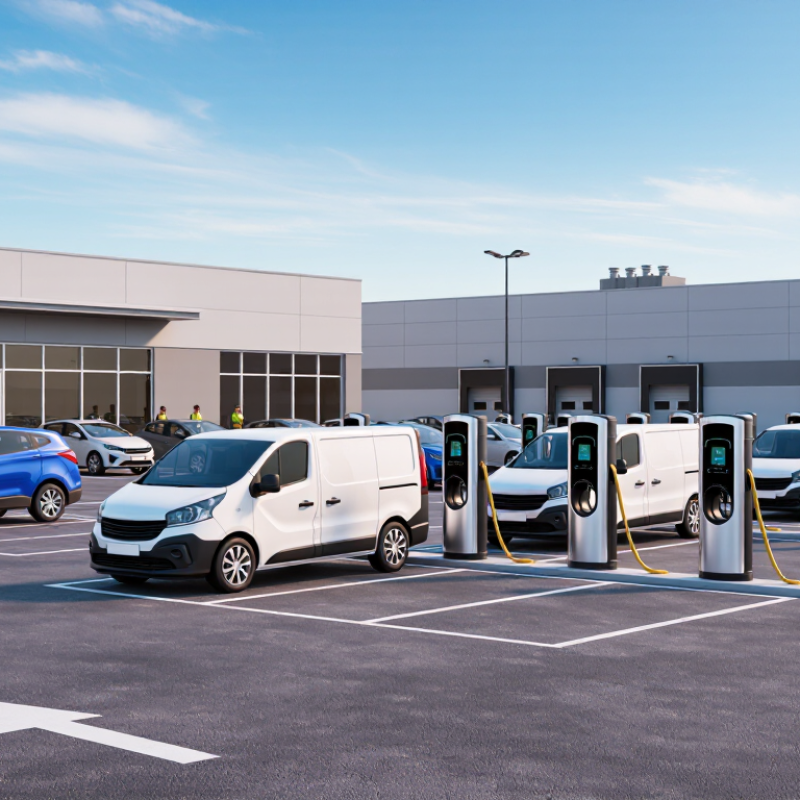
Assess Business Charging Needs and Network Expansion Goals
Before expanding a DC charging network, a business should measure how vehicles actually arrive and leave. Review vehicle types, daily mileage, parking duration, and peak charging hours. A delivery depot may need rapid overnight recovery, while a hotel may serve drivers parked for several hours. These patterns require different charger power levels and site layouts.
Use charging records, fleet schedules, employee surveys, and utility data to estimate demand. Count current sessions, average energy delivered, failed starts, and queue times. A simple site walk can reveal practical problems, such as blocked spaces, poor lighting, or a cable that cannot reach a vehicle port. Ask drivers directly. Their experience often exposes issues that spreadsheets miss.
Set expansion goals that connect charging activity with business results. Targets might include reducing vehicle downtime, supporting a larger electric fleet, or limiting peak electricity costs. Plan for the next three to five years, but avoid installing capacity that remains unused. That mistake is expensive.
Pilot one location before repeating the design across several sites. Track utilization during weekdays, weekends, and seasonal demand. Review transformer capacity, parking circulation, accessibility, maintenance access, and emergency procedures with qualified electrical professionals. Local requirements can vary, so verify permits and safety standards before construction. A forecast can still be wrong. Leave space for modular upgrades, collect feedback monthly, and revise the network plan when real charging behavior disagrees with early assumptions.
Expanding a DC charging network begins with disciplined site evaluation, not charger count. A convenient highway location may lack safe vehicle access, drainage, lighting, or room for future expansion. The International Energy Agency’s Global EV Outlook 2024 recorded more than four million public chargers worldwide in 2023. Competition for suitable sites will therefore increase.
Measure traffic patterns by hour, vehicle types, dwell time, and seasonal demand. Then inspect transformer distance, feeder voltage, fault levels, and available substation capacity.
Ten 350-kilowatt chargers represent 3.5 megawatts at full output. That load can exceed a commercial property’s existing connection.
NREL’s National Charging Network Study estimates that the United States may need about 28 million charging ports by 2030. Local grid planning must support that growth, not only today’s vehicles.
Our own early screening can overvalue parking visibility. The spreadsheet may be wrong.
Regulatory review should begin before lease signing. Confirm construction permits, accessibility rules, fire separation, electrical inspections, signage, payment transparency, data privacy, and utility interconnection procedures.
In the European Union, the Alternative Fuels Infrastructure Regulation requires high-power charging pools along major transport corridors, with phased capacity targets beginning in 2025.
Other jurisdictions may require different spacing, uptime reporting, or consumer protections.
Keep a written compliance matrix, with an owner and deadline for every approval. Timelines often slip. A realistic project plan includes transformer procurement, traffic studies, civil works, and commissioning tests.
Expanding a DC charging network requires more than adding powerful hardware. Businesses should match charger types to vehicle dwell time, parking patterns, and electrical capacity. A 60–120 kW charger may suit offices where vehicles stay for several hours. Highway-facing sites may need 180–350 kW units for shorter visits. Higher power is not always better. It can increase installation costs, demand charges, and transformer requirements.
Site experience matters. Before installation, an electrical contractor should review service capacity, cable routes, drainage, lighting, and accessibility. A useful layout leaves space around each cabinet for maintenance. It also prevents queues from blocking delivery areas. Our early planning was too optimistic about peak demand. Real usage often changes after nearby businesses adjust their working hours. A staged rollout can reduce that risk.
The network software should connect every charger to one operating dashboard. Look for live status updates, remote resets, energy monitoring, user access controls, and clear payment records. Load management can distribute available power when several vehicles charge together. Open communication standards can also reduce dependence on one hardware supplier. Strong cybersecurity matters, especially when chargers connect to payment and building systems. Test alerts during quiet hours. Small failures become expensive when nobody sees them. Reliable reporting helps managers compare utilization, maintenance time, and energy costs before expanding again.
Expanding a DC charging network in 2026 starts with a site decision, not a charger purchase. A practical plan maps traffic, dwell time, fleet schedules, electrical capacity, drainage, lighting, and accessible parking. Our early projects underestimated trenching distance. That mistake increased civil costs and delayed commissioning. A load study should test peak demand, transformer capacity, protection settings, and future expansion. Leave spare conduit where possible. It is cheaper than reopening pavement later. Design drawings should show cable routes, bollards, signage, fire access, and maintenance clearance. Local permits and utility reviews belong in the schedule, not as last-minute tasks.
Financing should match how the site earns money. Businesses can compare direct capital spending, equipment loans, leases, or shared-investment agreements. Each option changes cash flow, ownership, maintenance duties, and tax treatment. Model electricity demand carefully. Utilization may grow slowly during the first twelve months. Avoid optimistic forecasts. A sensitivity table should test low traffic, higher electricity prices, repair costs, and delayed grid upgrades. Keep a reserve for unexpected civil work. It protects the deployment schedule.
Deployment works better in controlled phases. Install one or two chargers first, then measure sessions, peak loads, payment failures, and user complaints. Use those findings before expanding across the property. Technicians need safe isolation procedures, spare connectors, remote diagnostics, and clear maintenance access. Staff should know how to handle damaged cables and blocked charging bays. Software integration also needs testing under weak network conditions. The plan may look perfect on paper. Real sites rarely cooperate completely. Review every assumption after commissioning, especially the ones that seemed obvious.
Global public EV charging points, 2022–2023
Global public charging infrastructure grew from approximately 2.7 million points in 2022 to nearly 4 million in 2023. This rapid expansion supports a phased business strategy: prioritize high-traffic sites, combine capital investment with financing or operating-lease models, standardize site design, and deploy DC fast chargers in measurable stages.
Source: International Energy Agency, Global EV Outlook 2024. Figures are rounded estimates for global publicly available charging points.
2026 Best Ways to Expand DC Charging Networks for Businesses
Operate, Monitor, and Scale the Charging Network Efficiently
A reliable DC charging network begins with disciplined daily operation, not a large equipment order. Site teams need clear ownership for connector faults, payment issues, and emergency shutdowns. At one busy depot, we used a simple opening check: inspect cables, confirm isolation switches, and test a live session. Small checks matter. We recorded every fault, response time, and repeated failure in a shared maintenance log. This created useful evidence for technicians and managers.
Monitoring should show more than energy delivered. Track charger availability, session failures, queue length, power quality, and average repair time. Set alerts for abnormal temperature, communication loss, and repeated payment errors. A dashboard is helpful, but only when someone acts on its warnings. We once ignored several short offline events because service quickly returned. The issue later caused longer outages. That mistake changed our review process.
Scaling works better through modular planning. Confirm transformer capacity, cable routes, drainage, lighting, and accessible parking before adding new chargers. Use qualified electrical professionals and follow applicable safety requirements. Separate user access, maintenance permissions, and operational data. Begin with high-demand locations, then compare utilization before expanding. Keep spare cables and critical components nearby. Growth can expose weak procedures. Regular drills, staff training, and honest performance reviews help the network remain dependable as demand increases.
| Expansion Area | Recommended Operating Standard | Planning Data / Benchmark | What to Monitor | Scale-Up Trigger |
|---|---|---|---|---|
| Site Assessment | Confirm parking flow, charger placement, accessibility, drainage, lighting, and emergency access before construction. | Allow space for electrical equipment, cable movement, maintenance access, and future charging stalls. | Traffic patterns, dwell time, daily arrivals, peak-hour demand, and available electrical capacity. | Projected peak demand exceeds the initial design capacity or causes queueing during operating hours. |
| Charger Power Mix | Combine moderate-power DC chargers for longer dwell times with higher-power units for rapid turnaround. | Common DC charging equipment spans approximately 50 kW to 350 kW; actual vehicle acceptance may be lower. | Delivered power, vehicle power acceptance, charging duration, and energy delivered per session. | Average session duration is too short for available power or vehicles regularly wait for higher-power stalls. |
| Electrical Capacity | Use load studies, staged installation, and power management to avoid unnecessary peak-demand costs. | Required capacity depends on charger rating, simultaneity, local tariffs, and site operating profile. | Real-time load, transformer utilization, feeder limits, demand peaks, and power-quality events. | Electrical utilization approaches the site limit or demand charges rise faster than charging revenue. |
| Power Sharing | Dynamically distribute available power according to vehicle need, session priority, and site limits. | Power-sharing systems can reduce simultaneous peak load while keeping multiple connectors available. | Power allocation, connector occupancy, charging curves, curtailed energy, and peak shaving. | Several chargers are active at once and unmanaged charging repeatedly creates avoidable peaks. |
| Network Uptime | Define uptime by connector availability, not only by station connectivity, and separate planned from unplanned downtime. | Set an internal availability objective of at least 98% per connector, with higher targets for mission-critical sites. | Online status, failed starts, communication loss, payment errors, and mean time to repair. | Monthly connector availability remains below the internal target or repeated faults affect the same equipment. |
| Remote Monitoring | Use centralized monitoring with alerts, event logs, remote resets, and role-based operational dashboards. | Alert severity should distinguish safety events, charger faults, communication issues, and payment failures. | Fault codes, alert age, reset success rate, open tickets, and unresolved incidents by site. | Manual inspection is required for routine faults or unresolved alerts exceed the defined response window. |
| Utilization | Measure utilization by connector and time period instead of relying only on total energy sales. | Track occupied time, active charging time, energy delivered, and completed sessions separately. | Connector utilization, peak occupancy, average session length, queue time, and energy per session. | Sustained peak-period occupancy and queueing indicate that additional connectors may be economically justified. |
| Preventive Maintenance | Schedule inspections based on operating hours, environment, fault history, and manufacturer maintenance requirements. | Inspect cables, connectors, cooling systems, filters, enclosures, emergency stops, and protective devices. | Repeat faults, component temperature, connector condition, inspection completion, and repair cost. | Fault frequency or repair cost increases despite completed corrective maintenance. |
| Customer Experience | Provide clear stall status, pricing, instructions, accessibility, lighting, and support contact information. | A successful session should include authorization, connector lock, energy transfer, payment completion, and receipt availability. | Start success rate, payment completion, support contacts, abandoned sessions, and customer feedback. | Failed starts or abandoned sessions increase, especially at specific connectors or during peak periods. |
| Interoperability | Select equipment and software that support open communication, standardized data exchange, and future system integration. | Use documented charging communication protocols and maintain secure, version-controlled software configurations. | Protocol errors, firmware versions, API status, transaction synchronization, and data completeness. | New equipment cannot be integrated without proprietary workarounds or manual data reconciliation. |
| Cybersecurity | Segment charging networks, apply least-privilege access, encrypt communications, and maintain an incident-response plan. | Use unique credentials, multi-factor authentication where available, patch management, backups, and audit logs. | Unauthorized access attempts, outdated software, certificate expiry, account activity, and backup status. | Security gaps remain unresolved or the network expands faster than access-control and monitoring processes. |
| Data and Reporting | Create one reporting structure for energy, revenue, reliability, utilization, maintenance, and customer service. | Use consistent definitions for session, downtime, availability, occupancy, energy delivered, and failed start. | Daily energy, monthly utilization, uptime, revenue per connector, cost per session, and incident trends. | Management decisions rely on conflicting reports or site-level data is unavailable for more than one reporting cycle. |
| Phased Expansion | Install in repeatable phases so civil works, electrical capacity, software configuration, and maintenance can scale together. | Reserve conduit routes, switchgear space, communications capacity, and parking positions for future phases. | Demand growth, queue time, utilization by hour, capital cost per connector, and operating margin. | Demand, service quality, and financial performance meet the approved expansion case for multiple reporting periods. |
Review vehicle types, daily mileage, parking duration, and peak charging hours. A delivery depot may need rapid overnight recovery. A hotel may need slower charging during long stays. Use charging records, fleet schedules, employee surveys, and utility data.
Track session counts, energy delivered, failed starts, queue times, and charger availability. Record patterns during weekdays, weekends, and seasonal periods. Ask drivers directly. Their comments may reveal blocked spaces or cables that cannot reach vehicle ports.
Connect charging targets with measurable results. Goals may include reducing vehicle downtime, supporting fleet growth, or limiting peak electricity costs. Plan three to five years ahead. Avoid installing capacity that may remain unused.
A pilot tests the design before wider construction. Measure utilization, traffic flow, accessibility, lighting, and maintenance access. Compare real behavior with early forecasts. Forecasts can still be wrong.
Inspect cables, isolation switches, and visible damage. Test a live charging session when appropriate. Confirm emergency controls are accessible. Small checks matter. Record faults, response times, and repeated failures in a shared log.
Monitor charger availability, session failures, queue length, power quality, and repair time. Add alerts for abnormal temperatures and communication losses. Payment errors also deserve attention. A dashboard helps only when someone responds.
Confirm transformer capacity, cable routes, drainage, lighting, parking circulation, and accessible spaces. Check whether maintenance teams can reach equipment safely. Keep spare cables and critical components nearby. Growth can expose weak procedures.
Assign clear responsibility for connector faults, access problems, and emergency shutdowns. Train staff and conduct regular drills. Review performance honestly each month. We once ignored short offline events. Later, they caused longer outages.
Expanding a commercial DC charging network begins with a clear understanding of business goals, customer demand, vehicle usage patterns, and future growth expectations. How to expand DC charging networks for businesses depends on matching charger availability with operational needs while selecting locations that offer convenient access, sufficient parking, and strong traffic potential. Each proposed site should be reviewed for electrical capacity, connection costs, construction conditions, accessibility, and applicable permitting or regulatory requirements.
A practical expansion strategy should also define suitable charger types, power levels, payment functions, load management tools, and network software. Businesses can then create a phased installation and financing plan that balances capital investment with expected utilization and revenue. After deployment, continuous monitoring is essential for tracking uptime, energy use, charging performance, maintenance needs, and customer experience. By using operational data to improve scheduling, manage power efficiently, and prioritize future locations, businesses can build a reliable, scalable, and cost-effective DC charging network.

Vernon Charger